

Ultimate Guide to Natural Parasite Protection
Pets face risks from both external and internal parasites, which can harm their health and even pose dangers to humans. While chemical treatments are common, they can lead to adverse effects like seizures, skin irritation, and environmental harm. This guide focuses on natural methods to manage and prevent parasites safely, including:
- Foods: Pumpkin seeds, garlic (used correctly), and fermented vegetables can help with internal parasites.
- Herbs: Chamomile, thyme, and diatomaceous earth target parasites naturally but require careful use.
- Topical Remedies: Coconut oil, neem oil, and essential oils like cedarwood repel fleas and ticks.
- Bio-Resonance Technology: The CatanDog's Medal offers a chemical-free, long-term solution.
- Home Care: Vacuuming, washing bedding, and using natural yard treatments like nematodes prevent infestations.
Protecting pets involves consistent grooming, a healthy diet, and combining natural remedies with professional veterinary care when needed.
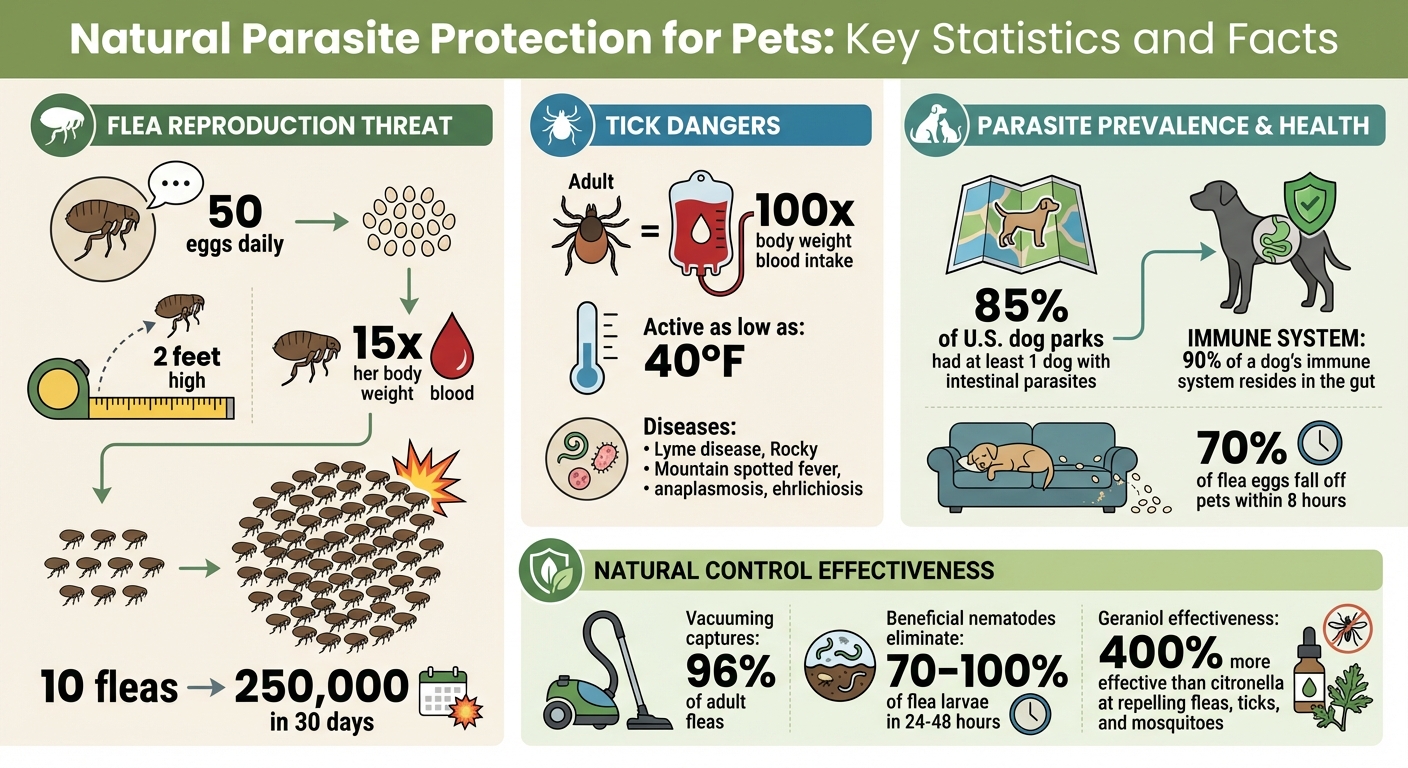
Natural Parasite Protection for Pets: Key Statistics and Facts
Parasites and Their Health Risks
Common Parasites That Affect Pets
Parasites, both external and internal, can cause significant harm to pets, impacting their health and well-being. Let’s start with external parasites like fleas and ticks. These tiny creatures may seem insignificant, but their impact is anything but minor. A single female flea can lay up to 50 eggs daily, jump as high as two feet, and consume blood equaling 15 times her body weight. Ticks are no less alarming - adult females can ingest up to 100 times their body weight in blood and stay active even in chilly temperatures as low as 40°F. Beyond their blood-sucking habits, these pests are notorious for spreading dangerous diseases. Ticks are carriers of Lyme disease, Rocky Mountain spotted fever, anaplasmosis, and ehrlichiosis, while fleas can transmit tapeworms and bartonellosis.
Mites also bring their share of problems. Ear mites cause intense ear irritation, prompting pets to shake their heads persistently. Sarcoptic mange mites, also known as scabies, lead to relentless itching and skin infections. Meanwhile, demodectic mange results in scaling skin and noticeable hair loss.
Internal parasites, such as roundworms, hookworms, tapeworms, heartworms, and protozoa, attack pets from within. Roundworms and hookworms are particularly harmful to young pets, causing symptoms like weight loss, vomiting, and diarrhea. Hookworms latch onto the intestinal lining, drawing blood in quantities that can sometimes be life-threatening. Tapeworms, often contracted when pets ingest fleas, show up as rice-like segments in their feces. Heartworms, spread by mosquito bites, take residence in the heart and pulmonary arteries, leading to heart failure and lung issues. Protozoa like Giardia and Coccidia further damage the intestinal lining, resulting in diarrhea, dehydration, and poor nutrient absorption.
The prevalence of these parasites is concerning. Research conducted at U.S. dog parks revealed that 85% of the locations had at least one dog testing positive for intestinal parasites. These parasites aren't just a threat to pets - they can harm humans too. Roundworm larvae, for example, can migrate to vital organs like the liver, lungs, brain, and eyes, potentially causing permanent damage or blindness. Hookworm larvae can penetrate human skin, often through bare feet, leading to severe itching and visible red tracks. The Centers for Disease Control and Prevention (CDC) highlights the particular vulnerability of children:
Children are more vulnerable to infection than adults because they play on the ground, may put dirty objects in their mouths, and may even eat dirt.
This insight into the dangers posed by parasites emphasizes the importance of prevention. However, while traditional chemical treatments are often used to combat these pests, they come with their own set of risks.
Why Chemical Treatments Can Be Harmful
Chemical parasite treatments, though widely used, can sometimes pose risks that make them a less-than-ideal solution. For example, products containing permethrin are highly toxic to cats and can even be fatal if applied directly or if a cat comes into close contact with a treated dog. The American Veterinary Medical Association warns:
Cats are particularly sensitive to these products. Never use a product that is not approved for cats because the results could be deadly.
Aside from toxicity, chemical treatments can cause side effects like skin irritation, anxiety, and gastrointestinal issues. In rare cases, oral preventatives containing isoxazoline compounds have been linked to seizures. Certain groups of pets - such as puppies, kittens, senior animals, and those that are pregnant, nursing, or unwell - are especially vulnerable to adverse reactions. In households with multiple pets, there’s also the risk of accidental ingestion if pets groom each other before a topical treatment has dried completely.
Environmental concerns add another layer to the problem. Topical treatments can wash off during baths or swimming, while oral medications are excreted in pet feces, potentially affecting local ecosystems. Compounding this issue, climate change is expanding the habitats of parasites like ticks, allowing them to thrive in areas that were once too cold. This shift could lead to an increased reliance on chemical preventatives, further raising concerns about their safety and environmental impact.
Natural Prevention for Internal Parasites
Foods That Help Prevent Parasites
Taking care of your pet's gut health is a key step in naturally preventing internal parasites. Since nearly 90% of a dog's immune system resides in the gut, the food you provide plays a significant role in helping your pet resist and eliminate worms naturally.
Pumpkin seeds are a standout natural remedy. They contain cucurbitin, an amino acid that paralyzes worms, making it easier for your pet to expel them. To use, feed raw, organic, unsalted pumpkin seeds - about 1/4 teaspoon per 10 pounds of body weight - once or twice daily.
Garlic, when used correctly, can match the effectiveness of conventional dewormers without the harsh side effects. Chop raw garlic and let it sit for 10–15 minutes to activate its beneficial compounds. Safe dosages include up to 1/4 clove for small dogs, 1/2 clove for medium dogs, 3/4 clove for large dogs, and 1 clove for giant breeds, given twice daily. However, avoid garlic for pregnant or lactating pets or those on blood-thinning medications.
Fermented vegetables are another gut-friendly option, as they support the microbiome and strengthen immunity. Start with 1 to 3 teaspoons per day for every 20 pounds of body weight. Similarly, apple cider vinegar (ACV) creates an environment that parasites dislike. Add 1/4 to 1 teaspoon of raw, organic, unfiltered ACV to your pet's food or water daily.
Fruits like pineapple and papaya, rich in enzymes like bromelain and papain, help with protein digestion and fight off worms. Other options, like pomegranate and olive leaf extract (with at least 12% oleuropein), can also aid in expelling parasites.
If dietary changes alone don't suffice, herbal supplements can provide additional support.
Herbal Supplements for Parasite Control
Certain herbs can be highly effective in managing parasites while also addressing related gut issues. For example, chamomile not only helps expel roundworms and whipworms but also soothes intestinal inflammation. A glycerin-based tincture works best, with a dosage of 0.25 ml to 0.50 ml per 20 pounds of body weight, given twice daily for two weeks. For hookworms, thyme can be helpful, but stick to the herb form, as the essential oil is not safe for pets.
Another option is food-grade diatomaceous earth (DE), which physically reduces worm counts. However, it’s less effective against tapeworms. To use, mix DE into wet food to prevent your pet from inhaling the powder. Dosages range from 1 teaspoon for small dogs to 1 tablespoon for larger dogs.
For more persistent infestations, stronger herbs like wormwood and black walnut hull can be effective but should be used with caution. Wormwood contains thujone, a compound that can be toxic if misused and is particularly harmful to cats. Black walnut targets a wide range of parasites, including their eggs, but improper dosing can lead to serious side effects. Natural health expert Amy Thompson advises:
"Wormwood is another powerful herb that can be effective against worms but should be used with caution due to its potential toxicity."
These potent herbs should only be used under the supervision of a holistic veterinarian and are not safe for pregnant or nursing animals. Additionally, if using Oregon grape as a dewormer (12 drops per 20 pounds), it’s essential to provide liver support, such as milk thistle at 1/4 teaspoon per 20 pounds of body weight.
Natural health researcher Alex Seilis highlights the importance of professional guidance:
"Food alone may not get rid of every worm infestation and in more stubborn cases you may need to ask your holistic vet for help with natural worm treatments."
Interestingly, some practitioners suggest that deworming treatments may be more effective when given around a full moon, as parasites are believed to be more active during this time.
Natural Prevention for External Parasites
Natural Topical Treatments
Protecting your pet from fleas and ticks doesn’t always mean turning to harsh chemicals. There are natural alternatives that can be just as effective. Take food-grade diatomaceous earth (DE), for example. This powder works by dehydrating the exoskeletons of fleas, killing them on contact. You can sprinkle it on carpets, bedding, and even your pet’s coat. For added effectiveness, place a small amount in your vacuum bag to deal with any captured pests.
Another option is coconut oil, which contains lauric acid that repels and smothers parasites. Gently massage it into your pet’s coat to limit flea movement and soothe irritated skin. If you prefer a spray, try boiling 1–2 sliced lemons in water for a few hours. Once cooled and strained, this mixture can be applied to your pet’s bedding or coat - just avoid their face. Keep in mind, lemon sprays should be used cautiously with cats, as they’re more sensitive to citric acid.
Neem oil is another natural remedy that disrupts the life cycle of parasites. It’s often found in natural shampoos and sprays that not only repel fleas but also calm irritated skin. You can also make herbal rinses by steeping rosemary, sage, or chamomile in hot water, letting it cool, and then applying it to your pet’s coat. For a dry treatment, grind dried rosemary leaves into a fine powder and sprinkle it on carpets or pet bedding.
Essential Oils That Repel Parasites
Essential oils can be potent flea and tick repellents, but they need to be handled carefully. Cedarwood oil is a popular choice for sprays and bedding, while geraniol, derived from geranium flowers, is particularly effective - it’s said to be 400% more effective than citronella at repelling fleas, ticks, and mosquitoes. Dr. Jean Hofve, a holistic veterinarian, highlights its effectiveness:
"Geraniol is an extremely effective flea repellent derived from geranium flowers... scientists were able to extract geraniol, an oil that is 400% more effective than citronella at repelling fleas, ticks and mosquitoes."
Other essential oils like lavender and peppermint oil offer additional benefits. Lavender not only repels parasites but also soothes the skin, while peppermint oil can kill both fleas and their eggs. However, essential oils should always be diluted before use. For dogs, mix 1–2 drops of essential oil per ounce (2 tablespoons) of a carrier oil like coconut or olive oil. Cats require even more caution - dilute 1 drop in 1.5–2 ounces of carrier oil, or avoid essential oils altogether, as cats lack the enzymes needed to process them safely. Geraniol is one of the few oils considered safe for cats.
Apply these diluted mixtures to pet bedding or a fabric collar rather than directly on the skin. Watch for signs of distress, such as drooling, panting, or lethargy, to ensure your pet tolerates the treatment well.
The CatanDog's Medal: Bio-Resonance Technology

For those looking for a completely hands-off solution, there’s an alternative to natural topical treatments and essential oils. The CatanDog's Medal offers a chemical-free way to protect your pet using bio-resonance technology. This small medal hangs on your pet’s collar and creates an invisible barrier against fleas and ticks - no chemicals, batteries, or reapplication required.
The medal provides up to 5 years of protection and is lightweight, waterproof, and safe for all pets, including puppies, kittens, and pregnant animals. It’s also suitable for homes with children. Made from jewelry-grade Zamak, the medal is priced at $99.99 for one, with discounts available for bulk purchases ($85.00 each for two medals or $75.00 each for three).
This low-maintenance option eliminates the need for monthly applications or the detailed preparation required with essential oils, making it a practical choice for busy pet owners seeking reliable, long-term protection.
Top Natural Remedies For Parasites In Your Dogs & Cats - Holistic Vet Advice
sbb-itb-861ee2e
Creating a Parasite-Free Environment
Keeping your home and yard free of fleas is just as important as treating your pet. Why? Because most flea activity happens off your pet. A single female flea can lay up to 50 eggs a day, which means just 10 fleas can multiply into 250,000 in only 30 days. To truly protect your pet, you need to tackle both indoor and outdoor spaces alongside any direct treatments.
Indoor Cleaning and Maintenance
When it comes to indoor flea control, vacuuming is your best friend. Angie Hickman and Caroline Cox from the Northwest Center for Alternatives to Pesticides emphasize:
Vacuuming is perhaps the most important part of any nonchemical flea control program.
Vacuuming doesn’t just remove adult fleas - it also stimulates dormant pupae to hatch, making them easier to eliminate. Research shows that vacuuming can capture up to 96% of adult fleas. During an infestation, vacuum daily, focusing on carpets, baseboards, and areas under furniture. Always empty the vacuum into a sealed bag and discard it outside [5,32].
For washable items like pet bedding, blankets, and furniture covers, use hot water (at least 120°F) and dry them on high heat or in direct sunlight weekly to kill eggs and larvae [32,35].
For deeper cleaning, sprinkle food-grade diatomaceous earth on carpets, especially along baseboards, and work it into the fibers with a broom. Leave it for several hours before vacuuming [5,34]. Steam cleaning is another effective method, as the combination of heat and soap can kill fleas and their eggs hiding deep in carpets and upholstery [32,33]. At night, you can also set a trap by placing a bowl of soapy water under a lamp; fleas are drawn to the heat and will jump into the water [33,6].
While thorough indoor cleaning is vital, don’t overlook the importance of maintaining your yard to prevent fleas from re-entering your home.
Outdoor and Yard Management
You don’t need to treat your entire yard with chemicals. Fleas tend to cluster in shaded, moist areas rather than spreading evenly across the lawn. Focus on "hot spots" like shaded areas under decks, porches, and shrubs.
Regular yard upkeep is key. Mowing the lawn and trimming bushes increase sunlight exposure, which naturally kills flea larvae [37,39]. Rake up leaves, twigs, and thick thatch, as these can become nesting spots for fleas and the wildlife that carry them [37,39].
For a natural solution, apply beneficial nematodes - tiny worms that feed on flea larvae. One package of these nematodes can cover 2,000 to 3,000 square feet, and they can eliminate 70% to 100% of flea larvae within 24 to 48 hours [39,37].
You can also use cedar chips or mulch around your yard’s perimeter and under porches as a natural flea repellent [37,38]. Plant herbs like lavender, rosemary, peppermint, and lemongrass near patios and entryways to deter fleas further [37,39]. To keep wildlife from bringing fleas into your yard, install fencing, avoid overwatering, and never leave pet food outside overnight [36,41].
As Dr. Eric Benson from Clemson University explains:
Because you can't control what's wandering through, fleas are constantly reintroduced to your yard.
Grooming and Hygiene for Parasite Prevention
Regular grooming is more than just keeping your pet looking good - it's a vital step in catching and removing parasites early. Every brushing or bath gives you the chance to physically remove pests and spot any warning signs that might otherwise stay hidden.
Bathing and Brushing Your Pet
Stick to a regular grooming schedule. For short-haired pets, aim for weekly brushing, while long-haired pets may need brushing two to three times a week. This helps clear out loose fur, which can otherwise trap flea eggs and larvae, keeping them from spreading to your carpets or furniture.
When it’s bath time, soap and water are highly effective at killing adult fleas on contact. Dr. Jean Hofve, a holistic veterinarian, suggests:
Lather the neck first, so fleas can't run up onto the head. Leave the lather on your pet for a few minutes to help smother any persistent fleas, and then rinse well.
In between baths, a fine-tooth flea comb is a must during peak flea season. Dr. Hofve emphasizes:
The ultimate weapon in the battle against fleas is the Flea Comb. It is the best method to discover whether fleas are present.
Keep a bowl of soapy water nearby to dunk any fleas you catch with the comb, ensuring they don’t escape. For an extra layer of defense, dip the comb in lemon juice before each pass, as its acidity works as a natural flea deterrent.
This grooming routine not only keeps your pet clean but also gives you the perfect opportunity to check for any signs of infestation.
Checking for Parasites During Grooming
Grooming time is also inspection time. Pay close attention to areas where parasites like to hide, such as the neck, ears, base of the tail, armpits, between the toes, and the belly. Fleas are particularly drawn to warm, furry spots like the inner thighs and tail base.
To confirm fleas, try the damp paper towel test: place any black specks you find on a damp white paper towel. If the specks turn reddish-brown, you’re looking at flea dirt, which is digested blood and a clear sign of an active infestation. You might also feel tiny bumps that resemble grains of sand (flea eggs) or larger, pea-sized lumps that could be ticks.
If you’ve been in wooded or grassy areas, check for ticks as soon as possible. Use fine-tipped tweezers to grab the tick close to the skin, then pull upward with steady, even pressure. Avoid twisting or jerking, as this can leave the tick’s mouthparts embedded in the skin. Don’t forget to inspect your pet’s ears for any brown or black discharge, and watch for excessive head shaking - these could be signs of ear mites.
When to See a Veterinarian
While natural prevention can help keep most pets in good health, there are times when immediate veterinary care becomes essential. Spotting these warning signs early can make all the difference for your pet's health and safety.
Signs of Severe Parasite Infestations
Certain symptoms can point to dangerous levels of parasite infestations. For example, pale gums or lips might signal anemia caused by blood loss from fleas, ticks, or hookworms - this is especially risky for younger animals.
Other red flags include labored breathing, persistent coughing, fever, or swollen lymph nodes, which could indicate heartworm, tick-borne diseases like Lyme disease, or complications from migrating larvae. Sudden paralysis or painful joints might also stem from tick paralysis or other infections. Severe weight loss, muscle wasting, or a pot-bellied appearance in young pets can suggest advanced internal parasite problems. Additionally, bloody or watery diarrhea, which can lead to life-threatening dehydration, demands urgent care.
Skin issues like open sores, hot spots, or bacterial infections also warrant attention. Ear mites, for instance, can lead to blood blisters in the ear flap due to excessive head shaking. According to the American Veterinary Medical Association:
Consult your veterinarian if your pet excessively scratches, chews, or licks their coat, or persistently shakes their head or scratches their ears.
If you notice worms in your pet's vomit or stool, or see tapeworm segments resembling "grains of rice" around their rectum, it’s time to visit the vet for proper diagnosis and treatment. Veterinary care in these cases works alongside natural methods to ensure your pet’s recovery.
Using Natural Methods with Veterinary Treatment
Natural remedies can be a great complement to veterinary care, especially when dealing with parasite infestations. Since about 90% of your pet's immune system is located in the gut, natural support can boost overall health - even during medical treatments.
Be sure to inform your veterinarian about any natural remedies or supplements you’re using. Some, like wormwood or black walnut, can be harmful if misused or may interfere with prescribed medications. The American Veterinary Medical Association advises:
Tell your veterinarian if you've tried any parasite remedies, as this may impact your veterinarian's recommendation.
For severe infestations, combining medical treatment with environmental measures is key. Vacuuming thoroughly, washing bedding in hot, soapy water, and keeping your yard tidy can help disrupt the parasite life cycle. Natural options, such as milk thistle, may help support the liver during treatment, while pumpkin seeds - rich in cucurbitin, which can paralyze worms - can work as a natural dewormer. However, these should only be used under veterinary supervision.
As Alex Seilis from Dogs Naturally Magazine explains:
Food alone may not get rid of every worm infestation and in more stubborn cases you may need to ask your holistic vet for help with natural worm treatments.
Conclusion
Protecting your pet from parasites requires a multi-layered approach: proper nutrition, natural repellents, and consistent environmental care. As PureForm Pet Health highlights:
A healthy lifestyle is the best defence.
Understanding how parasites operate is key. For instance, about 70% of flea eggs fall off your pet within eight hours, often landing in carpets. This makes daily vacuuming - removing up to 96% of adult fleas - and washing bedding in hot water every week just as important as topical treatments. These steps create a strong barrier against infestations in your home.
Regular grooming with a fine-toothed flea comb is another essential step. It helps catch issues early, stopping them before they spiral out of control. Pair this with yard care - keeping grass trimmed and clearing debris where parasites thrive - and you’ll significantly reduce their breeding grounds.
Natural methods also work best when combined with veterinary care. Routine fecal exams and professional screenings can detect internal parasites that home remedies might miss. And if you’re using natural supplements, always let your vet know to ensure they’re safe and won’t interfere with any treatments.
FAQs
What are the best natural ways to protect pets from internal parasites?
The most effective natural ways to protect pets from internal parasites revolve around boosting their immune system and incorporating safe, food-based remedies. A well-rounded, nutrient-rich diet plays a pivotal role, especially when it includes immune-supporting nutrients like zinc and vitamin D. Some foods, like pumpkin seeds, are particularly helpful because they contain cucurbitacin, a compound known to help expel worms. Similarly, black cumin seeds can serve as a natural dewormer when given in small, controlled amounts.
Herbal options such as wormwood, cloves, and neem can also aid in eliminating parasites. However, these remedies should be used cautiously and only under veterinary supervision due to their strong effects. Essential oils, like oregano or tea tree oil, might offer benefits in diluted forms, but they must be handled carefully to avoid causing irritation.
Maintaining a clean environment is equally important in preventing reinfection. Regularly cleaning up waste, washing food and water bowls, and ensuring your pet avoids contaminated soil or water are simple yet critical steps. By combining these hygienic practices with natural remedies, you can help your pet stay healthy and free of parasites.
What’s the best way to use essential oils to naturally repel fleas and ticks on my pet?
Essential oils can offer a natural and safe way to protect your pet from fleas and ticks - when used properly. Some oils known for their repellent properties include lavender, peppermint, eucalyptus, lemongrass, rosemary, and thyme. However, it’s important to dilute these oils with a carrier oil, like coconut or almond oil, to prevent skin irritation. A good rule of thumb is to mix 5–10 drops of essential oil with 1 teaspoon of carrier oil. Apply a small amount to the back of your pet’s neck or the base of their collar, avoiding their face, eyes, and any open wounds. Reapply every 3–5 days or after bathing.
If you prefer a broader application, you can make a light spray. Combine 1 cup (8 fl oz) of distilled water, 1 teaspoon of carrier oil, and 10–15 drops of essential oil in a spray bottle. Shake it well and lightly mist your pet’s coat, steering clear of their head. Allow the coat to dry completely before letting your pet outside.
Always keep an eye out for any signs of irritation, like redness or itching, and discontinue use if your pet shows any adverse reactions. When applied consistently and with care, essential oils can be a helpful addition to your pet’s natural flea and tick prevention routine.
When should I take my pet to the vet if I'm using natural parasite prevention?
Even with natural ways to prevent parasites, there are moments when a trip to the vet becomes unavoidable. If your pet is showing signs like constant scratching, licking, chewing, or shaking their head, or if you notice skin irritation, hair loss, or visible fleas and ticks, it’s time to get professional help. These symptoms might signal an infestation that natural remedies can’t fully handle, which could lead to other health problems.
It’s especially important to consult a vet if your pet is young, pregnant, older, or has a compromised immune system, as they are more at risk from parasites. Additionally, symptoms like weight loss, diarrhea, vomiting, lethargy, or changes in appetite could indicate internal parasites that may need prescription treatment. If you’ve been using natural prevention consistently but still see recurring infestations, a vet can help reassess your approach to protect your pet’s health.
For those looking for a chemical-free option, the CatanDog’s Medal provides long-term, natural flea and tick protection without relying on harmful chemicals or batteries. That said, if your pet shows any concerning symptoms, reaching out to a veterinarian is always the safest choice.