

How Omega Fatty Acids Boost Pet Immunity Against Parasites
Omega fatty acids, particularly omega-3 and omega-6, strengthen your pet's immune system and improve resistance to parasites like fleas, ticks, and worms. These nutrients enhance immune cell function, reduce inflammation, and even weaken parasites directly. Research shows that omega supplements can reduce parasite infections and improve overall health when paired with external solutions like chemical-free repellents.
Key takeaways:
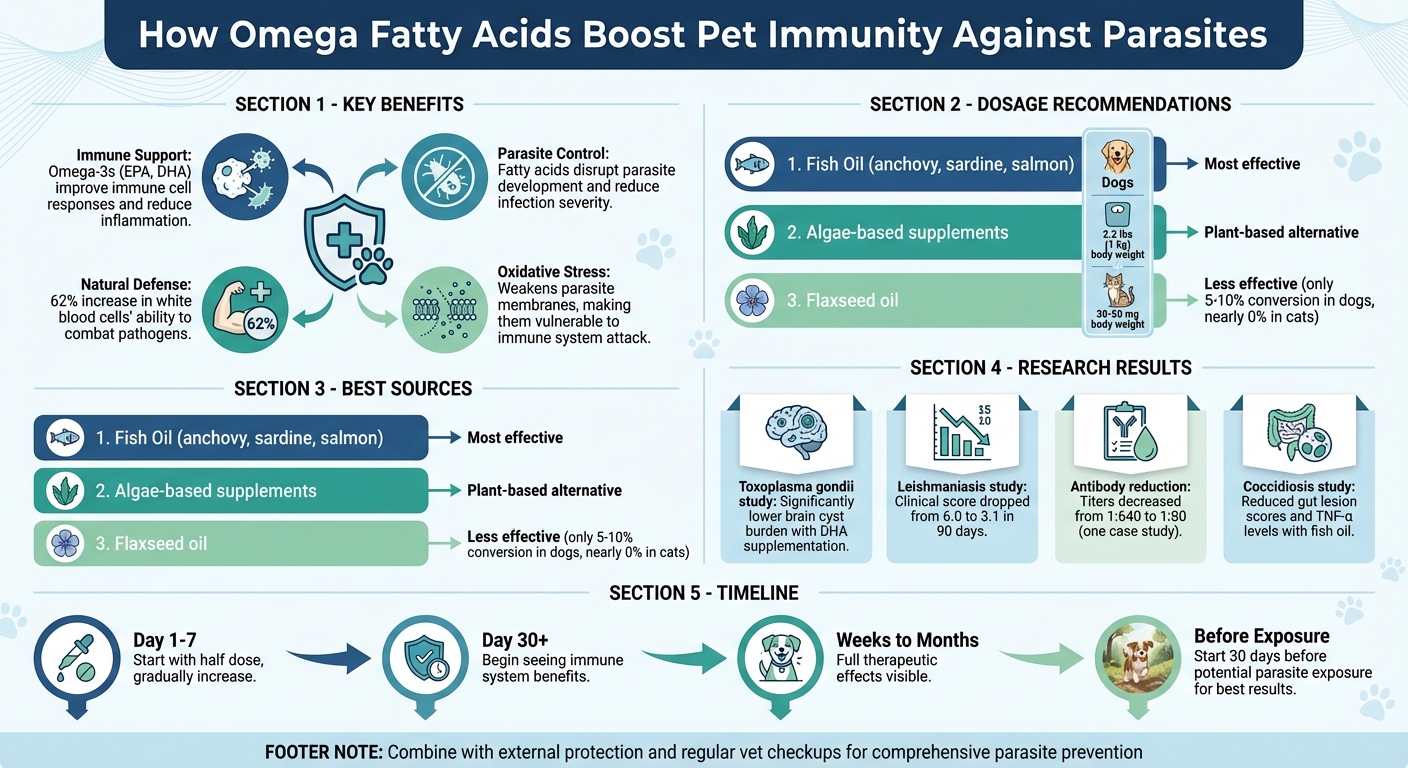
- Immune Support: Omega-3s (EPA, DHA) improve immune cell responses and reduce inflammation.
- Parasite Control: Fatty acids disrupt parasite development and reduce infection severity.
- Sources: Fish oil (anchovy, sardine, salmon) is the best source for pets.
- Dosage: Dogs need 50-75 mg EPA/DHA per 2.2 lbs; cats need 30-50 mg per kg.
- External Protection: Combine with tools like the CatanDog's Medal for added defense.
For a natural, effective approach to parasite prevention, omega fatty acids are a safe, long-term solution. Pair them with external measures and regular vet checkups to keep your pet healthy and parasite-free.
Omega Fatty Acids for Pet Parasite Prevention: Dosage Guide and Benefits
Dr. Jean Hall: Omega-3 Science & Pet Health
How Omega Fatty Acids Support Pet Immunity
Omega fatty acids play a key role in boosting your pet’s immune system, helping them fend off parasites naturally. These essential nutrients work at the cellular level, offering a way to strengthen your pet’s defenses without solely depending on chemical treatments.
Omega Fatty Acids and Immune Function
Omega-3 fatty acids (like EPA and DHA) and omega-6 fatty acids integrate into the membranes of immune cells, improving their ability to communicate and respond to threats effectively. This enhanced communication allows immune cells to mount quicker and more efficient defenses.
These fatty acids also increase the process of phagocytosis, where white blood cells engulf and destroy harmful invaders. For instance, fish oil supplements have been shown to boost neutrophils' ability to combat pathogens like E. coli and P. aeruginosa by an impressive 62%. Additionally, DHA triggers macrophage autophagy, a critical defense mechanism against intracellular parasites such as Toxoplasma gondii.
On top of reinforcing cellular defenses, omega fatty acids help regulate the immune system by balancing cytokine responses. They downregulate pro-inflammatory markers like TNF-α and IL-6, while increasing IL-10, which has anti-inflammatory properties. As Sajid Ur Rahman from the Shanghai Veterinary Research Institute explains:
Omega-3 and omega-6 polyunsaturated fatty acids... have gained significant attention for their therapeutic role in parasitic infections and a variety of essential structural and regulatory functions in animals and humans.
But omega fatty acids don’t stop at supporting immune cells - they also take the fight directly to parasites.
Building Natural Parasite Resistance
Omega fatty acids not only enhance your pet's immune response but can also weaken parasites themselves. When these fatty acids become part of a parasite’s membrane, particularly in coccidia like Eimeria, they make the parasites more vulnerable to oxidative stress caused by the pet’s white blood cells. This oxidative damage disrupts the parasite’s development, reducing the severity of infections.
Starting omega fatty acid supplementation at least 30 days before potential exposure can help regulate inflammatory responses and improve outcomes. By strengthening your pet’s natural defenses in advance, these nutrients make it harder for parasites to take hold, creating a powerful barrier against infections. Together, these effects reduce the need for chemical interventions, offering a more natural path to keeping your pet healthy.
Research on Omega Fatty Acids and Parasite Control
Studies on Omega Fatty Acids Against Parasites
Recent research highlights the potential of omega fatty acids in reducing parasite burdens in pets. A study conducted in September 2019 at Chungnam National University in Korea, led by Jae-Won Choi and Jae-Min Yuk, examined the effects of DHA on Toxoplasma gondii, a common intracellular parasite. Using Fat-1 transgenic mice - genetically engineered to convert omega‑6 into omega‑3 - the researchers observed a significantly lower brain cyst burden in these mice after infection with the ME49 strain compared to non-transgenic mice. The results suggest that DHA stimulates macrophage autophagy, allowing immune cells to trap and eliminate parasites effectively.
"Our results revealed mechanisms by which endogenous ω3-PUFAs and DHA control T. gondii infection and suggest that ω3-PUFAs might serve as therapeutic candidate to prevent toxoplasmosis." - Jae-Min Yuk, Department of Infection Biology, Chungnam National University
In another study conducted in July 2019 in Italy, researchers investigated the effects of omega fatty acids on dogs naturally infected with Leishmania infantum. Dr. Pietro Lombardi and Dr. Laura Cortese from the University of Naples Federico II led the trial involving 12 dogs, which were given a supplement containing 3% krill oil and 1% krill flour over 90 days. The results were promising: the mean clinical score dropped from 6.0 to 3.1, and antibody titers decreased significantly. For instance, one dog’s titer fell from 1:640 to 1:80, while another’s dropped from 1:320 to 1:40.
These findings, supported by both laboratory experiments and field observations, highlight the potential of omega fatty acids in parasite management.
Laboratory and Real-World Evidence
Controlled laboratory studies further demonstrate the anti-parasitic effects of omega fatty acids. In one study, chickens infected with Eimeria tenella - a parasite causing coccidiosis - showed reduced gut lesion scores and lower levels of TNF‑α, an inflammatory marker, when given fish oil supplements. Omega‑3 fatty acids appear to disrupt parasite development by inducing oxidative stress in the parasite's membrane.
Field studies back up these laboratory findings, showing that omega‑3 supplementation helps restore regulatory T cells, which are often suppressed during chronic infections. This immunomodulatory effect enhances the pet's ability to fight off parasites, while also directly impairing parasite survival. Together, these studies emphasize the dual benefits of omega fatty acids: strengthening the immune system and providing a natural approach to parasite control. This research points to a promising avenue for reducing reliance on chemical-based parasite prevention strategies.
sbb-itb-861ee2e
Adding Omega Fatty Acids to Your Pet's Diet
Best Sources of Omega Fatty Acids for Pets
Pets can't naturally produce omega-3 fatty acids, so they need to get EPA and DHA from their diet. One of the most effective ways to do this is through fish oil supplements, which come in liquid or capsule forms and deliver these essential nutrients. Oils from marine sources like anchovy, sardine, and salmon are rich in EPA and DHA, while algae-based supplements provide a plant-based option with the same active forms your pet requires.
"The most efficient way to increase EPA and DHA in a pet's diet is to provide these fatty acids in a supplemental form, such as fish oil." - Catherine Lenox, DVM, DACVN, Royal Canin
While plant oils like flaxseed contain ALA (alpha-linolenic acid), they aren't as effective. Dogs can only convert about 5-10% of ALA into EPA and DHA, and cats convert almost none. This makes marine-based sources far superior when it comes to boosting your pet's immune system and natural defenses against parasites. When choosing a supplement, look for products certified to be free of heavy metals and enriched with Vitamin E to prevent oxidation. Opt for options that have undergone third-party testing to ensure purity and freshness, so you're not inadvertently introducing harmful contaminants like mercury into your pet's diet. These concentrated marine-based sources are not only safer but also allow for precise dosing, making it easier to incorporate into your pet's routine.
Dosage Recommendations and Feeding Tips
Once you've selected a high-quality omega-3 supplement, proper dosing is key to ensuring it works effectively. The recommended dosage is 50-75 mg of EPA and DHA per 2.2 lbs (1 kg) of body weight for dogs and 30-50 mg per kg for cats. For example, a 22-lb dog would need about 500-750 mg of combined EPA and DHA - not the total fish oil volume. Always check the label to confirm the concentrations of these specific fatty acids.
Administer the supplement with food daily to improve absorption and reduce the risk of stomach upset. If using a liquid form, carefully measure the dose to ensure accuracy. It's a good idea to start with half the recommended dose and gradually increase it over several days. Keep an eye out for any side effects like vomiting, diarrhea, or belching, especially at higher doses.
"Omega-3 fatty acids must be given long-term (weeks to months) before you can tell if they are helping your pet." - Kathleen Claussen, DVM
Before starting supplementation, consult your veterinarian, especially if your pet is on medications like anticoagulants (aspirin), corticosteroids (prednisone), or NSAIDs (carprofen, meloxicam), as omega-3s can interact with these drugs. Avoid giving omega-3s to pets with conditions such as bleeding disorders, pancreatitis, or chronic diarrhea. Store the supplements in a cool, dry place away from light and heat, and discard them if they develop an unpleasant odor. By following these guidelines, you can ensure your pet receives the full benefits of omega-3 fatty acids, helping to enhance their overall health and natural defenses.
Pairing Omega Fatty Acids with Natural Parasite Prevention
Give your pet a well-rounded defense by combining internal support with external parasite protection.
CatanDog's Medal: A Chemical-Free Solution for Parasites
Omega fatty acids help strengthen your pet's immune system and skin, but external solutions are just as important. Enter the CatanDog's Medal from catandogs.shop - a clever, chemical-free alternative for keeping fleas and ticks at bay. Using bio-resonance technology, this lightweight and waterproof medal creates a natural barrier against parasites. It doesn’t rely on chemicals, batteries, or anything harmful, and it offers protection for up to five years. That’s a long-term, hassle-free solution that works hand-in-hand with the benefits of omega fatty acids.
This combination of internal and external protection is a powerful duo against parasites. While the medal shields your pet from external threats, omega-3 and omega-6 fatty acids work internally to keep their skin healthy - your pet’s first line of defense. Omega-6 fatty acids, like linoleic acid, strengthen the skin's structure, while omega-3s help manage inflammation and itching caused by parasite bites.
"Nutrition should be regarded as a key component of a comprehensive parasite management strategy." – Hany Elsheikha, Professor of Parasitology
Together, these tools create a layered defense system that protects your pet inside and out.
Building a Natural Protection Plan
A complete parasite prevention plan combines internal support, external barriers, and regular health checks. Stick to the recommended omega-3 dosage with meals to support your pet’s immune system, and attach the CatanDog's Medal to their collar for continuous external protection.
A nutritious diet is key to maintaining strong immunity. Regular fecal screenings can help identify internal parasites like Giardia or Coccidia early, so you can tackle issues before they affect your pet’s health. By combining omega fatty acids, external parasite repellents like the CatanDog's Medal, and proactive monitoring, you create a comprehensive natural defense against parasites. This multi-layered approach ensures your pet stays happy, healthy, and parasite-free.
Conclusion: Natural Solutions for Parasite Prevention
Protecting your pet from parasites doesn’t have to mean turning to synthetic treatments. Incorporating omega fatty acids into your pet’s diet can boost their immune system, ease inflammation caused by parasite bites, and promote healthier skin.
Studies show that omega-3 and omega-6 polyunsaturated fatty acids not only help the immune system but also have direct anti-parasitic properties. This makes them an effective and natural option for managing parasitic infections.
For complete protection, combining internal support with external measures is key. The CatanDog's Medal, available at catandogs.shop, uses bio-resonance technology to repel parasites without chemicals. Priced at $99.99 for a single medal (or as low as $75.00 each when buying three), it’s a one-time purchase that eliminates the need for recurring chemical treatments.
This solution is safe for pets of all ages, including those sensitive to traditional pesticides, and is also safe for households with children. Pairing omega supplements with the CatanDog's Medal creates a reliable, natural defense against parasites.
To ensure your pet’s protection, maintain a steady omega supplementation routine, keep the CatanDog's Medal securely attached to their collar, and visit your vet regularly to address any health concerns. This layered approach offers chemical-free, effective protection while supporting your pet’s overall health and happiness.
FAQs
How do omega fatty acids help protect pets from parasites?
Omega‑3 and omega‑6 fatty acids are key players in strengthening your pet's immune system. These nutrients help produce anti-microbial compounds - such as resolvins, protectins, and lipoxins - that work to curb the growth and survival of parasites. By enhancing your pet's natural defenses, these fatty acids offer a layer of protection against parasitic infections.
Beyond their role in immunity, omega fatty acids contribute to your pet's overall health, making them a smart choice for supporting long-term wellness.
What are the best dietary sources of omega fatty acids for pets?
Omega-3 and omega-6 fatty acids play a crucial role in your pet's health, as their bodies can't produce these nutrients on their own. These fats contribute to a shiny coat, healthy skin, a strong immune system, and even help reduce inflammation while offering some defense against parasites.
For omega-3s, marine fish oils - like those from sardines and anchovies - are among the best sources. These oils are packed with EPA and DHA, two essential fatty acids that benefit your pet's health. High-quality fish oil supplements are a convenient way to provide these nutrients in a safe, concentrated form. On the omega-6 side, plant-based oils such as sunflower, corn, or safflower oil are excellent choices, delivering linoleic acid to support skin health. While seeds like flaxseed and chia also contain omega-3 precursors, pets have a limited ability to convert these into EPA and DHA.
Maintaining a proper balance between omega-6 and omega-3 fatty acids is key to your pet’s overall wellness. Combining these dietary sources with natural parasite protection - like the bio-resonance flea and tick barrier available at catandogs.shop - can help ensure your pet stays healthy and protected without relying on chemicals.
Can omega fatty acids be used with other parasite prevention methods?
Omega-3 and omega-6 fatty acids can work hand-in-hand with other parasite prevention methods to keep your pet healthy and comfortable. These nutrients not only support your pet's immune system but also help manage inflammation and ease itching caused by parasite bites. The best part? They're safe to use alongside topical or oral preventives, adding an extra layer of support to your parasite control plan.
These fatty acids also complement chemical-free options like the CatanDog’s Medal, which acts as a natural shield against fleas and ticks without relying on harmful chemicals. By combining dietary supplements with a non-chemical prevention method, you create a balanced approach that protects your pet while promoting overall well-being. Just remember to check in with your veterinarian before introducing any new supplements to make sure they’re the right fit and properly dosed for your pet.