

How to Build a High-Impact Kitten Foster Program
For many communities, the challenge of managing neonatal kittens, or "bottle babies", represents one of the most delicate and demanding aspects of animal welfare. In an inspiring interview with Marne Russ, founder of Kitten College, we gain valuable insights into how a well-structured program can revolutionize kitten care while fostering collaboration between shelters, fosters, and TNR (trap-neuter-return) initiatives. This article breaks down the transformative strategies behind Kitten College, offering a roadmap to developing programs that save lives and strengthen community ties.
Understanding Kitten College: A Vision Rooted in Passion and Practicality
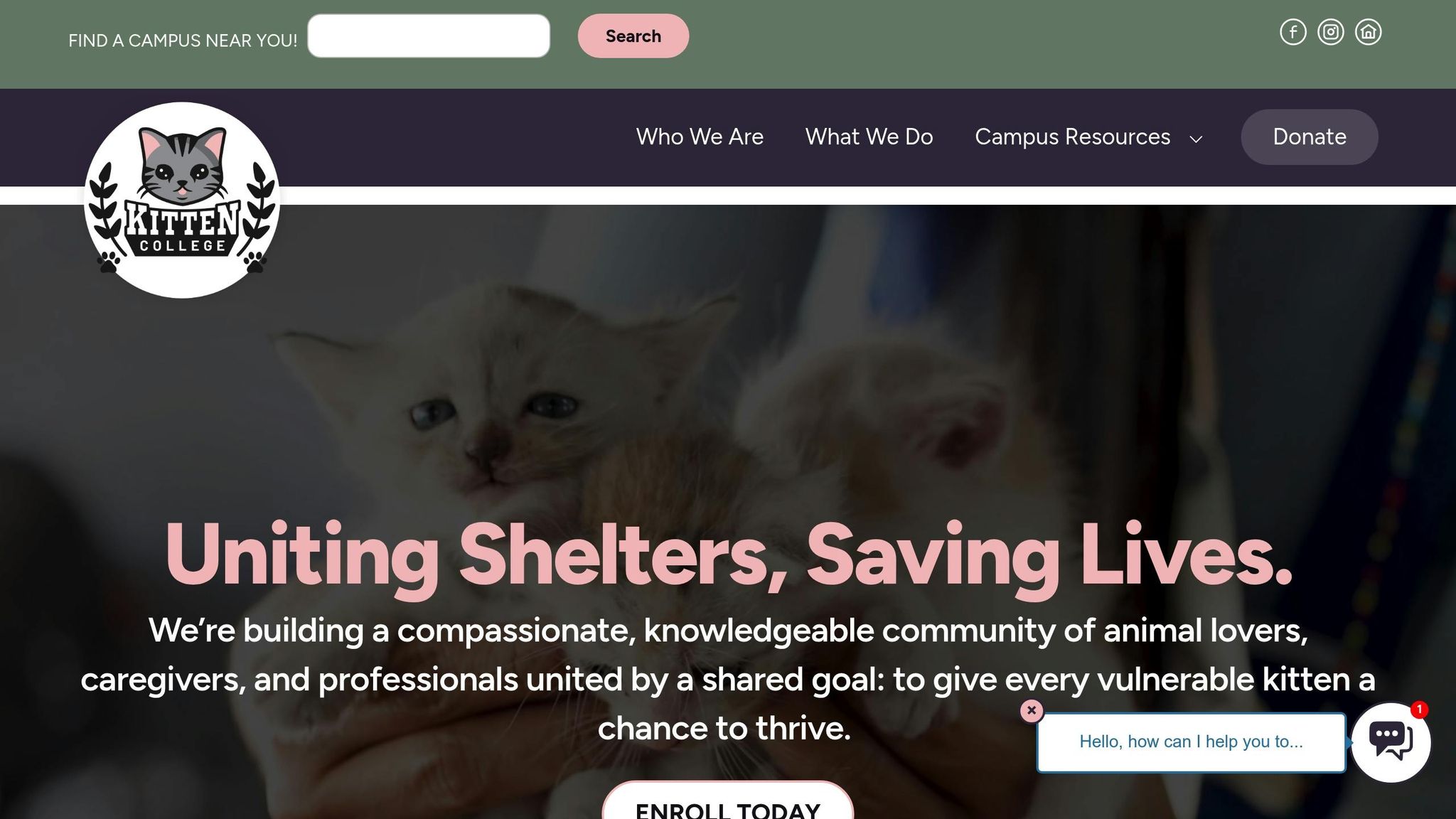
Marne Russ’s journey began in 2000 when her volunteer work in a shelter’s cat room sparked a passion for neonatal kitten care. Over the years, she transitioned from fostering individual kittens to building large-scale systems for their care, culminating in the creation of Kitten College in 2017.
Kitten College began as an experimental program within the Animal Welfare League of Arlington (AWLA). Its goal? To create a replicable, scalable model for neonatal kitten care at municipal and rural shelters nationwide. Today, the program has grown into a robust nonprofit that supports shelters across the country with guidance, training, and resources.
What sets Kitten College apart is its innovative and foster-centered approach, which prioritizes flexibility, foster specialization, and kitten socialization. The program’s success is evident in its growth - from handling 92 kittens in its first year to supporting nearly 1,600 annually, with a neonatal survival rate of 94–96%.
sbb-itb-861ee2e
The Key Components of a Successful Kitten Foster Program
1. Adapting to Community Needs
One of the foundational ideas behind Kitten College was recognizing that the needs of large urban shelters differ from those of smaller municipal or rural shelters. By tailoring the program to fit specific community demographics and resources, Kitten College has been able to achieve maximum impact.
Marne highlights the importance of "letting the program lead where it naturally could get stronger", emphasizing collaboration, flexibility, and adaptability.
2. Specialized Foster Care Levels
Kitten College introduced a groundbreaking structure that allows fosters to specialize in specific stages of a kitten’s life. The program uses a collegiate-style system - "Freshman", "Sophomore", "Junior", and "Senior" levels - so fosters can choose the roles that best fit their skills and availability.
For example:
- Freshman fosters handle neonatal kittens requiring bottle feeding around the clock.
- Sophomore fosters care for slightly older kittens who have transitioned to solid food but still need substantial attention.
- Junior and Senior fosters take over as kittens become more independent and prepare for adoption.
This system not only prevents foster burnout but also ensures that kittens receive the most appropriate care throughout their journey.
3. Fostering Collaboration with TNR Efforts
Kitten College bridges the gap between TNR groups and shelters, ensuring that TNR teams have a safe place to send the kittens they rescue. By integrating the needs of trappers into the program, Kitten College creates a seamless chain of care from the time kittens are trapped to their eventual adoption.
Marne advocates for pulling kittens from colonies if the resources exist to provide them with a safe foster environment. "Only about 25% of kittens born in colonies survive to maturity", she explains, making intervention crucial. However, fostering partnerships between TNR groups and shelters is vital to ensure these kittens don’t overwhelm the system.
4. Prioritizing Kitten Socialization
Unlike older practices that treated kittens as fragile "house flowers", Kitten College emphasizes socialization as an essential part of fostering. Kittens benefit from exposure to various environments, people (of all genders and ages), and even other animals. This not only helps them thrive but also increases their chances of adoption.
In addition, shifting kittens between fosters as they progress through the program has proven beneficial. While some fosters prefer to keep kittens from start to finish, many foster "teams" have emerged, where kittens transition seamlessly between different homes. This approach prevents caregiver fatigue and prepares kittens for the sights, sounds, and experiences of a forever home.
5. Education and Training for Fosters
Kitten College places a strong emphasis on educating fosters about best practices in kitten care. From feeding schedules to enrichment activities, the program ensures fosters are equipped with the tools they need to succeed.
For instance, new shelter medicine guidelines now recommend feeding neonatal kittens less frequently to reduce gastrointestinal issues and encourage healthier growth. Kitten College works to dispel myths and provide evidence-based training on such topics, partnering with experts like the University of Florida and UC Davis.
Challenges in Expanding Neonatal Kitten Care Nationwide
While Kitten College has achieved remarkable success, challenges remain. According to Marne, funding is the largest obstacle. The program’s rapid expansion - driven by high demand - requires more resources than its current structure can support.
Despite these hurdles, Kitten College’s mission remains clear: to make life-saving education and support accessible to shelters and fosters across the U.S., particularly in underserved rural areas. The ultimate vision is to establish a national training center for neonatal kitten care, offering specialized workshops for shelter staff, fosters, TNR trappers, and veterinary professionals.
Key Takeaways
- Tailor programs to community needs: Understand the unique demographics and resources of the area you serve to design an effective kitten foster program.
- Introduce foster specialization: Allow fosters to choose stages of kitten care that align with their skills and availability, preventing burnout and improving outcomes.
- Collaborate with TNR initiatives: Build strong relationships with TNR groups to create a safety net for kittens pulled from colonies.
- Focus on socialization: Expose kittens to a variety of experiences to prepare them for adoption and improve their health.
- Provide evidence-based training: Equip fosters with up-to-date knowledge on neonatal kitten care, debunking myths and misconceptions.
- Foster teamwork: Encourage fosters to collaborate and create a seamless system for kitten care, even during peak "kitten season."
- Expand access to resources: Advocate for free or low-cost training and supplies, especially in rural communities where resources are scarce.
- Plan for sustainability: Address funding challenges to ensure long-term success and scalability.
Conclusion
Kitten College illustrates how passion, innovation, and collaboration can transform neonatal kitten care. By prioritizing flexibility, education, and community engagement, programs like Kitten College not only save lives but also strengthen the bonds between shelters, fosters, and TNR groups.
For animal welfare advocates looking to implement or expand kitten foster programs, the principles of Kitten College offer a powerful blueprint. By fostering a culture of learning, adaptability, and shared responsibility, we can ensure that every kitten - no matter how vulnerable - gets a chance to thrive.
Source: "Revolutionizing Kitten Care: The Kitten College Model, Featuring Marnie Russ, Founder, National..." - Community Cats Podcast, YouTube, Jan 1, 1970 - https://www.youtube.com/watch?v=WhgGcwS16ZM