

How Pet Flea Treatments Affect Wildlife
Did you know your pet's flea treatment could harm wildlife? Chemicals like fipronil and imidacloprid, common in flea treatments, are polluting rivers, soil, and ecosystems. These substances, banned in agriculture for their toxicity, still persist in pet care. Here's the problem: they wash off during pet baths, shed into the environment, or enter waterways through runoff. The result? Harm to birds, fish, and insects, with effects rippling through food chains.
Key Takeaways:
- Fipronil was found in 100% of tested rivers; imidacloprid in 70%.
- Wildlife, from birds to aquatic species, faces risks from these chemicals.
- Contamination occurs through pet bathing, shedding, urine, and outdoor play.
Solution: Non-toxic flea control options like the CatanDog's Medal offer a safer alternative. Using bio-resonance technology, it repels parasites without chemicals, protecting both pets and nature. This reusable product lasts up to five years, making it an eco-friendly and cost-effective choice.
Why it matters: Switching to chemical-free methods can reduce pollution, safeguard ecosystems, and keep your pets safe - all without harmful side effects.
Pet flea treatment chemicals killing UK wildlife scientists warn
How Flea Treatment Chemicals Enter Nature
The same chemicals that protect our pets can also harm the environment. Flea treatments, while effective at keeping pests off our furry companions, often make their way into ecosystems. The paths these chemicals take reveal how wildlife is increasingly exposed to them.
Routes of Contamination
One major way these chemicals enter the environment is through wastewater from pet bathing. When treated pets are bathed, the chemicals on their fur wash down household drains. Unfortunately, most wastewater treatment plants aren’t designed to filter out pet parasiticides. Research by Preston-Allen et al. has shown that wastewater from homes is a key source of flea treatment chemicals in local waterways. Pollution levels downstream from treatment plants further confirm this, showing how bathing treated pets directly contributes to chemical contamination.
Another pathway is pet shedding. Treated animals naturally shed fur and skin flakes containing chemical residues. Wind and rain can carry these residues into nearby soil and water systems, spreading contamination further.
Pet urine is also a contributor. When pets excrete metabolized chemicals in their urine, these substances seep into the soil and groundwater, adding to the environmental burden.
Lastly, runoff during outdoor activities plays a role. When pets treated with flea chemicals swim or play in rain-soaked areas, water washes the chemicals from their fur into streams, ponds, and rivers. Unlike household wastewater, this runoff bypasses any treatment systems entirely.
Each of these pathways contributes to the gradual buildup of harmful chemicals in ecosystems.
Chemical Buildup in Ecosystems
Once these chemicals enter the environment, they don’t just disappear. Substances like imidacloprid and fipronil are known to persist in water, soil, and sediments. Over time, they spread through groundwater and surface water, contaminating larger areas.
The extent of this contamination is alarming. Imidacloprid, for example, has been found at toxic levels in two-thirds of UK rivers surveyed. Similarly, fipronil has been detected in every single river tested in related studies. These findings reveal how widespread the contamination of watersheds has become.
The problem isn’t limited to water. Soil contamination is a growing concern, especially in places where pets frequent, like yards, parks, and natural habitats. Chemicals from pet urine and shedding accumulate in these areas, exposing ground-dwelling insects, small mammals, and birds to harmful substances.
What’s even more troubling is how these chemicals move up the food chain. Small insects absorb contaminants from polluted soil and water. When birds, fish, or mammals feed on these insects, they ingest higher concentrations of the chemicals. This process, known as bioaccumulation, means even low levels of environmental contamination can have a big impact on wildlife. It’s a ripple effect that underscores the far-reaching consequences of these chemicals.
Impact of Flea Treatments on Wildlife
Using chemical-based flea treatments to protect pets comes with unintended consequences for the environment. These chemicals often find their way into natural ecosystems, creating a ripple effect that threatens wildlife across the United States.
Effects on Birds and Mammals
Birds face risks when they use pet fur treated with flea chemicals as nesting material. This exposure has been linked to higher chick mortality rates and declining bird populations. Mammals aren't spared either - contact with contaminated environments can disrupt essential behaviors like hunting and avoiding predators. It can also negatively affect their ability to reproduce successfully.
The problem doesn't stop on land. These chemicals also seep into waterways, wreaking havoc on aquatic ecosystems.
Harm to Aquatic Life
Aquatic environments are especially vulnerable to flea treatment residues. Freshwater invertebrates, such as caddisflies and mayflies, are highly sensitive to these chemicals. Since these tiny creatures are a cornerstone of aquatic food webs, their decline can destabilize entire ecosystems. Fish exposed to the contaminants often show altered behaviors, like swimming slower and staying closer to the bottom, making them easy targets for predators. Amphibians, with their delicate, permeable skin, are particularly at risk. In areas with heavy contamination, amphibian populations have noticeably declined.
The cascading effects of biodiversity loss in these environments are profound. When invertebrate populations shrink, the predators that rely on them - fish, birds, and mammals - struggle to survive. This imbalance can lead to long-term ecosystem instability and diminish critical natural processes, like water purification and nutrient cycling. Since these chemicals tend to persist in the environment, their harmful effects could last for generations.
sbb-itb-861ee2e
Non-Toxic Solutions for Flea and Tick Control
As concerns over chemical contamination grow, safer flea and tick control options are gaining traction. These alternatives avoid the environmental hazards tied to traditional treatments, offering effective parasite control without harmful chemicals.
The CatanDog's Medal: A Safer Choice
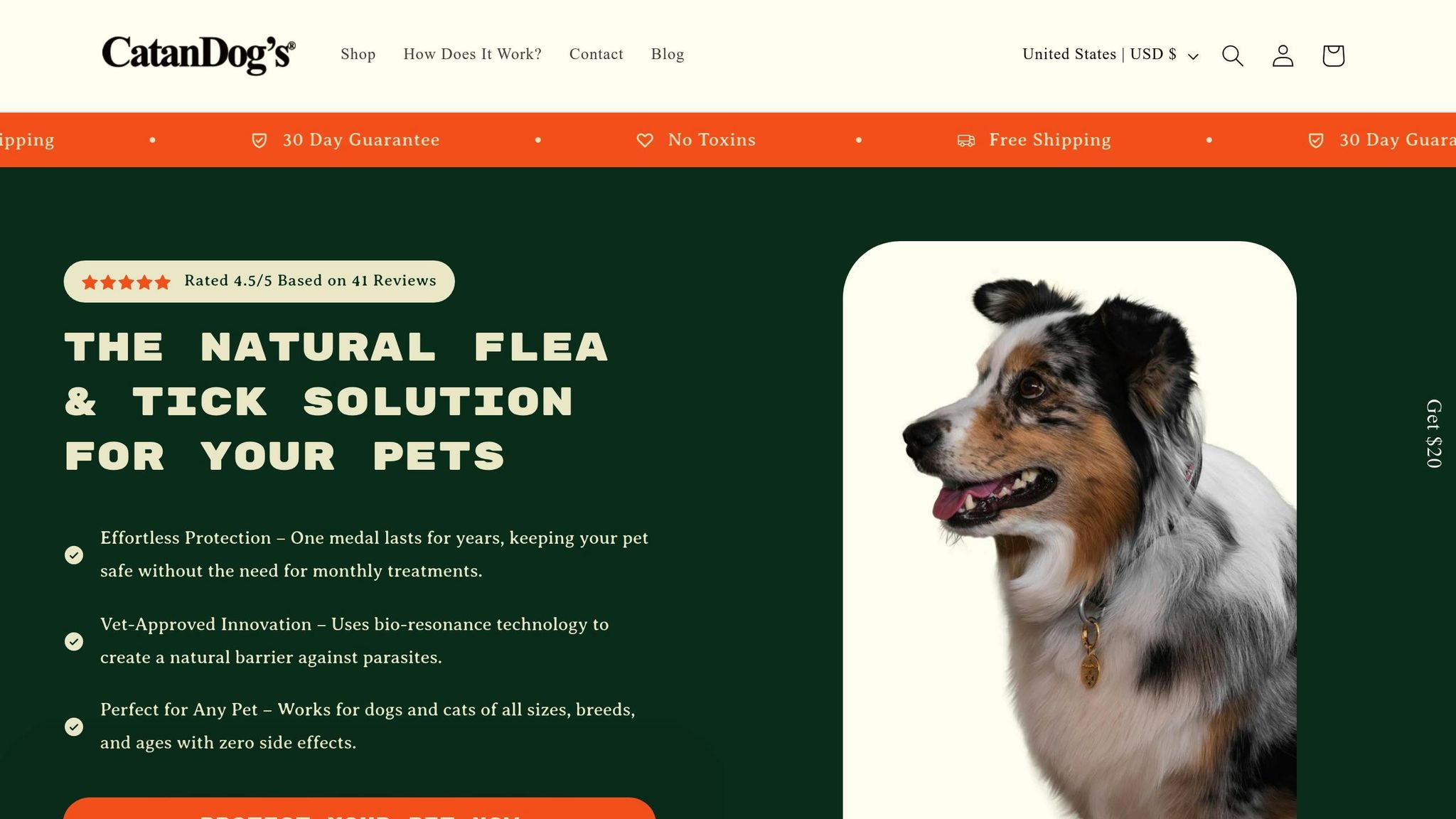
The CatanDog's Medal, available through catandogs.shop, uses bio-resonance technology to create a natural shield against fleas and ticks. By harnessing your pet's movement to generate electromagnetic energy, the medal produces protective Foucault currents that repel parasites.
"CatanDog's Medal produces electromagnetic and scalar waves" – Professor José Luis Arrans Gil
Priced between $75.00 and $99.99, the medal provides up to five years of chemical-free protection. It doesn’t require batteries, emits no odors, and boasts an impressive 95% effectiveness rate. Pet owners have shared glowing feedback:
"No ticks or other parasite anymore" – Sylvia and Sparky, verified owner
"Completely flea and tick free! Would never dream of putting dangerous chemicals either on her or in her!" – Rochelle, verified owner
Safe for pets and humans alike, this device ensures peace of mind for families while promoting a healthier environment.
Why Go Chemical-Free?
Opting for non-toxic flea and tick solutions offers several advantages. It eliminates the risks associated with chemical toxicity and avoids contributing to long-lasting environmental pollution. Traditional treatments often rely on chemicals like fipronil and imidacloprid, which have been found in 100% and 70% of English rivers, respectively. Bio-resonance technology, on the other hand, leaves no chemical trace.
The CatanDog's Medal also delivers long-term savings compared to monthly chemical treatments. With bundle pricing available for households with multiple pets, it’s a cost-effective and hassle-free option. Plus, there’s no need to worry about reapplications or restrictions when pets swim or play outdoors, making it a convenient and reliable choice for parasite control.
Chemical-Based vs. Chemical-Free Flea Treatments
Understanding the differences between traditional chemical flea treatments and modern chemical-free alternatives can help pet owners make better decisions for both their pets and the environment. These two approaches differ not only in their active ingredients but also in their impact on ecosystems, safety for pets, and long-term effectiveness.
Traditional flea treatments rely on synthetic insecticides like fipronil, imidacloprid, and permethrin. These chemicals are known to persist in the environment, often contaminating waterways and harming aquatic life long after they’re applied.
On the other hand, chemical-free solutions take a completely different approach. For instance, the CatanDog's Medal uses bio-resonance technology to create electromagnetic fields that naturally repel fleas and ticks. This method avoids introducing harmful substances into the environment and uses your pet’s movement to generate protective Foucault currents.
Pet safety is another critical factor. Chemical-based treatments can sometimes cause adverse effects, including skin irritation, neuromuscular issues, and gastrointestinal problems. In some cases, these reactions have been severe, with veterinary reports documenting fatalities in 42 cats and 1 dog during a study period. Chemical-free options like the CatanDog's Medal, however, provide protection without these risks, making them safer for pets of all ages and sizes.
Comparison Table
| Product Type | Active Ingredients/Technology | Nature Impact | Safety for Pets | Duration of Protection | Ease of Use |
|---|---|---|---|---|---|
| Chemical-Based | Fipronil, imidacloprid, permethrin | Contaminates waterways; persists in the environment | Risk of skin reactions, neurological effects, potential toxicity | 1–3 months per application | Requires careful dosing and regular reapplication |
| Chemical-Free | Bio-resonance electromagnetic technology | No environmental contamination; no toxic residues | No adverse effects; safe for all ages and sizes | Up to 5 years continuous protection | Simple collar attachment; no maintenance required |
Another important consideration is parasite resistance. Overuse of chemical treatments has led to fleas and ticks developing resistance, making these infestations increasingly difficult to manage. Chemical-free solutions avoid this issue by repelling rather than killing parasites, reducing the likelihood of resistance over time.
Additionally, chemical-based treatments can disrupt ecosystems by harming species that play key roles in the environment. In contrast, bio-resonance technology offers effective parasite protection without leaving toxic residues, allowing ecosystems to thrive undisturbed.
Protecting Pets While Preserving Wildlife
The environmental risks tied to chemical-based flea treatments are hard to ignore. These chemicals linger in ecosystems for years, disrupting the natural balance and harming both pets and wildlife. But here's the good news: pet owners can take steps to protect their furry friends without contributing to environmental damage.
You can break the cycle of harm by choosing solutions that prioritize both your pet's health and the planet. For example, chemical-free options like the CatanDog's Medal prove that effective flea and tick control doesn't have to come at the expense of nature. Unlike traditional treatments, this alternative avoids toxic substances that can contaminate waterways and threaten wildlife.
The impact of chemical exposure on wildlife is well-documented. Birds, for instance, often use pet fur in their nests. If that fur contains chemical residues, their chicks are exposed to harmful toxins. By switching to chemical-free solutions, this chain of exposure can be stopped.
The CatanDog's Medal provides a safer alternative by harnessing bio-resonance technology. This creates a natural barrier against parasites without introducing harmful substances into the environment. With a 95% success rate and protection that lasts up to five years, it’s a win-win for pets and wildlife conservation.
Opting for chemical-free treatments also reduces the demand for toxic substances that have already been banned in agriculture. Additionally, these alternatives eliminate the risk of side effects in pets, such as skin irritation, neurological issues, or digestive problems, which are often linked to traditional flea treatments. They also help prevent parasites from developing resistance, ensuring long-term effectiveness for flea and tick control.
Responsible pet care means thinking about the bigger picture. Choosing products like the CatanDog's Medal shows that protecting your pet and caring for the environment can go hand in hand. This choice safeguards not only your pet but also the birds, aquatic life, and ecosystems that thrive in clean, chemical-free environments. By making thoughtful decisions, pet owners can embrace a more environmentally conscious approach to pet care, benefiting both their companions and the natural world.
FAQs
How do chemical flea treatments for pets harm wildlife like birds and aquatic animals?
Chemical-based flea treatments for pets can pose unexpected dangers to wildlife. When pets are bathed or their waste enters the environment, these chemicals often find their way into waterways. Once there, they can harm aquatic life like fish and amphibians, disrupting ecosystems by poisoning organisms or interfering with their ability to reproduce.
Wildlife such as birds may also be at risk if they come into contact with treated animals or contaminated areas. To help safeguard both your pets and the natural world, explore non-toxic flea treatment options that are gentler on the environment.
How does the CatanDog's Medal benefit pets and the environment compared to chemical-based flea treatments?
The CatanDog's Medal offers a natural and safe option for protecting your pets from fleas and ticks. Powered by bio-resonance technology, it forms a protective barrier against parasites without the need for chemicals or batteries. This makes it a gentle choice for pets of all breeds, sizes, and ages.
Unlike traditional chemical treatments, the CatanDog's Medal is completely non-toxic and environmentally friendly. It helps safeguard your pets while reducing exposure to harmful substances, offering a reliable and long-term way to keep your furry companions healthy and happy.
What’s the best way to switch from chemical flea treatments to safer, non-toxic options for my pet?
Switching from chemical flea treatments to safer, non-toxic options is a smart move for both your pet's well-being and the planet. Chemical treatments often pose risks to wildlife and ecosystems, making it worthwhile to explore alternatives that are kinder to the environment.
One such option is the CatanDog's Medal, available at catandogs.shop. This chemical-free solution uses bio-resonance technology to create a natural shield against fleas and ticks. It’s designed to protect pets of all sizes and ages without relying on harmful chemicals or batteries. Plus, its durable design makes it an eco-conscious and long-lasting choice for pet owners aiming to make a healthier, greener change.