

5 Natural Flea Remedies for Nursing Dogs
When dealing with fleas on nursing dogs, chemical treatments can pose risks to both the mother and her puppies. Natural remedies are safer alternatives that avoid harmful chemicals while addressing flea infestations effectively. Here are five options:
- CatanDog's Medal: A tag using bio-resonance technology to repel fleas and ticks safely without chemicals. Attach it to your dog's collar for long-term protection.
- Cedarwood and Neem Oil Spray: Plant-based oils repel fleas and dissolve their exoskeletons. Dilute before use and avoid direct application near puppies.
- Diatomaceous Earth (DE): A natural powder that dehydrates fleas. Use "food-grade" DE and apply it to the environment, not directly to the dog.
- Apple Cider Vinegar (ACV): Adjusts skin pH to repel fleas. Mix with water for a spray or add a small amount to drinking water.
- Essential Oil Blends: Oils like lavender and rosemary repel fleas. Always dilute and consult a vet before use.
Key Tip: Always consult your veterinarian before starting any treatment, even natural ones. Combine these remedies with regular cleaning of your dog's environment, vacuuming, and using flea combs to ensure effective flea control.
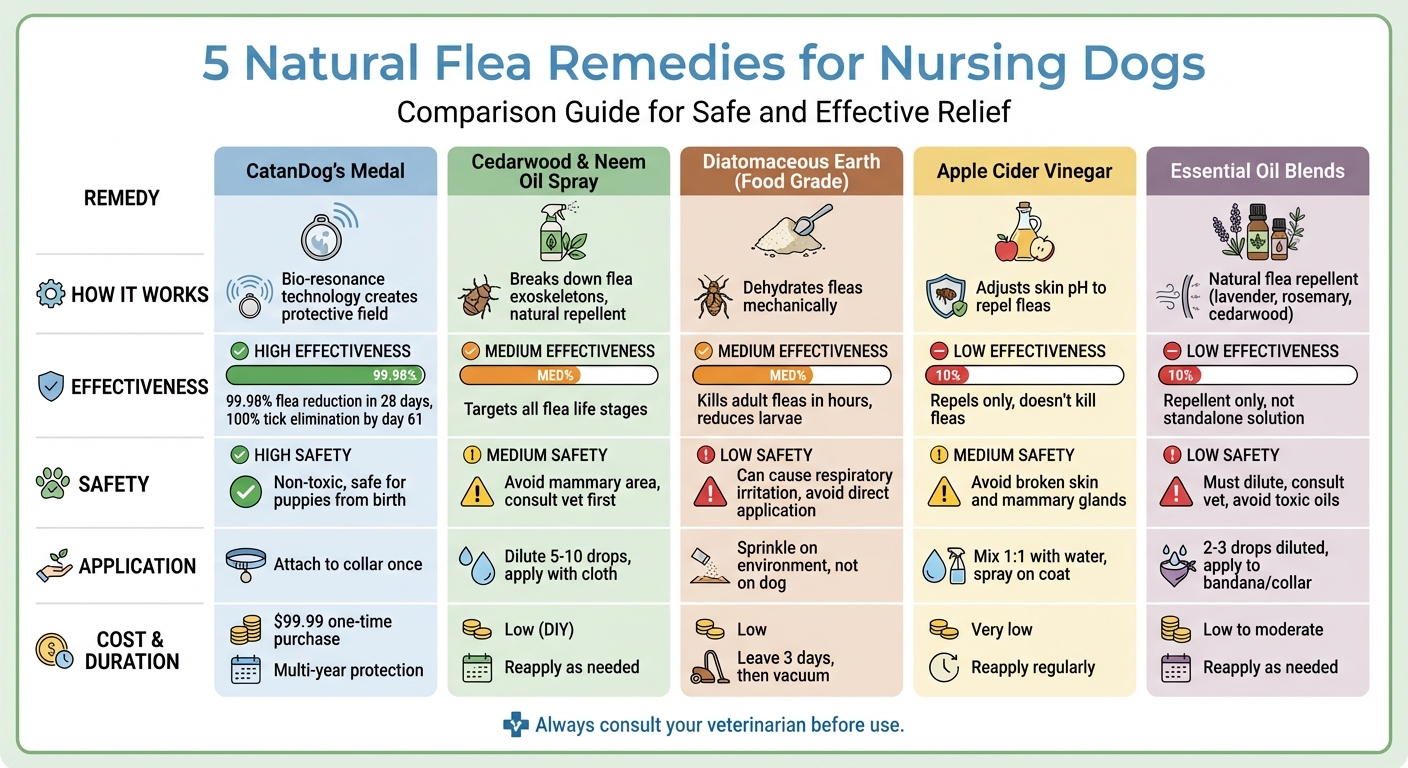
5 Natural Flea Remedies for Nursing Dogs Comparison Chart
Safely Get Rid of Fleas on A Nursing Dog
1. CatanDog's Medal: Bio-Resonance Technology
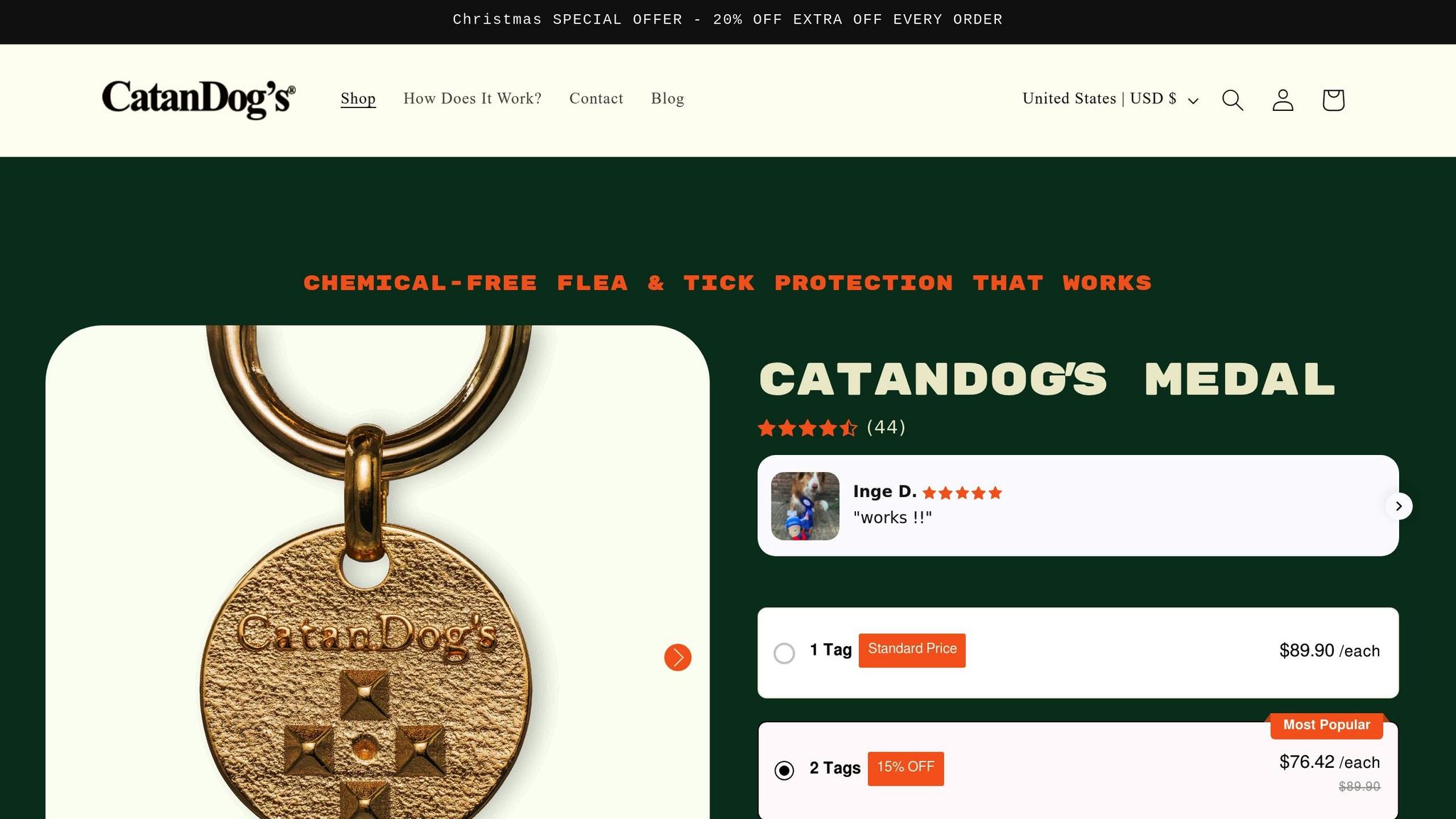
The CatanDog's Medal, available at catandogs.shop, offers a chemical-free solution for flea prevention, specifically designed with nursing dogs in mind. This lightweight tag attaches to your dog's collar and uses bio-resonance technology to create a protective field. As your dog moves, the medal interacts with the Earth's magnetic field, generating currents that disrupt the nerve signals of fleas and ticks. This clever design not only keeps parasites at bay but also ensures the safety of nursing dogs and their litters.
Safe for Nursing Dogs and Puppies
One of the biggest advantages of the CatanDog's Medal is its non-toxic nature, which eliminates the risk of chemical exposure for both nursing dogs and their puppies. The medal is designed to stay securely on the collar, avoiding any direct contact with puppies during grooming. With over 27 years of proven effectiveness across pets of all ages, from newborns to seniors, this natural alternative prioritizes safety.
Professor José Luis Arrans Gil highlights its mechanism:
"CatanDog's plate produces electromagnetic and scalar waves".
Beyond repelling fleas and ticks, the bio-energetic field strengthens your dog's natural immune defenses, making it less appealing to parasites.
Proven Flea Prevention Results
The medal's effectiveness is backed by clinical studies showing a 99.98% reduction in fleas within 28 days and complete tick elimination by day 61. Many users praise its natural approach, which aligns with these impressive results.
Simple and Convenient to Use
Using the CatanDog's Medal couldn't be easier. Just attach the durable metal tag to your dog's collar - no batteries, refills, or messy applications required. At $99.99 per tag, it’s a one-time purchase that delivers multi-year protection. For best results, keep the medal on your dog at all times. During the initial 28-day activation period, use a flea comb to remove any existing pests as the bio-resonant field takes effect.
This innovative solution proves that effective flea prevention can be both natural and hassle-free.
2. Cedarwood and Neem Oil Spray
A Natural, Chemical-Free Alternative
Cedarwood and neem oil sprays provide a plant-based solution for tackling fleas without relying on synthetic pesticides. Cedarwood oil works by breaking down flea exoskeletons at all life stages, while neem oil acts as a natural repellent, preventing fleas from attaching to your dog's coat. When used correctly, these oils are safe and effective. To prepare a spray, dilute 5–10 drops of essential oil with a carrier like coconut oil or water in a glass spray bottle. This natural approach makes it a safer choice for nursing dogs.
Safe Use Around Nursing Dogs and Puppies
Extra care is essential when using these oils with nursing dogs. While they are natural, essential oils are highly concentrated and should never be applied directly to areas where puppies might come into contact, especially the mammary area. Always dilute the oils and avoid applying them where puppies could ingest them. It’s also a good idea to consult your veterinarian before introducing cedarwood or neem oil sprays to nursing dogs. Direct application should be avoided until puppies are at least 10–12 weeks old.
Effective Flea Control at Every Stage
Cedarwood and neem oils are highly effective against fleas, targeting them at all stages of their life cycle. This is especially important since a single female flea can lay up to 40–50 eggs per day. According to Natural Dog Company, "the oils [cedarwood and neem] are both strong enough to dissolve the exoskeletons of eggs, larvae, and pupae". For the best results, pair the spray with good environmental practices, like frequent vacuuming, to keep fleas at bay.
Simple and Practical Application
Instead of spraying directly, lightly mist a soft cloth with the diluted solution and gently wipe it over your dog’s fur. Focus on areas like the back of the neck and along the spine. A basic DIY recipe includes 1 cup of distilled water, 1 cup of organic apple cider vinegar, 10 drops of neem oil, and 10 drops of lemon juice. Always test a small patch of skin first to ensure your dog doesn’t have an allergic reaction. This method ensures ease of use while keeping your pet comfortable and safe.
3. Diatomaceous Earth
Chemical-Free and Natural Solution
For nursing dogs needing a chemical-free option, diatomaceous earth (DE) offers a mechanical way to combat fleas. DE is a naturally occurring powder made from fossilized diatoms, which contain silica. It works by physically damaging flea exoskeletons with its sharp microscopic particles, absorbing their protective oils and causing them to dehydrate and die. Dr. Jean Hofve, a holistic veterinarian, highlights its benefits:
"DE kills fleas in all life stages by dehydrating them, a method that is not only non‐toxic to pets, humans, and the environment, but also a method that fleas cannot develop an immunity to".
Only use "Food Grade" DE - "Pool Grade" DE is processed differently and is unsafe for flea control. Its mechanical action can significantly reduce flea populations when used correctly.
Effectiveness in Flea Control
DE is effective at killing adult fleas within hours and can reduce larvae, though its impact on flea eggs is unclear. Since a single female flea can lay up to 2,000 eggs during her lifetime, addressing multiple stages of the flea lifecycle is essential. While DE can reduce flea numbers, some veterinarians caution that it may not be as reliable as modern preventive treatments when used alone.
Safety for Nursing Dogs and Puppies
DE is non-toxic but can cause respiratory, eye, and skin irritation if inhaled or touched. This is especially concerning for nursing dogs, as puppies might inhale the dust or ingest it while grooming. Always consult your veterinarian before using DE on nursing, pregnant, elderly, sick, or medicated pets. Avoid applying DE directly to the nursing dog's skin, particularly near the mammary glands, to reduce risks for the puppies.
Application Tips
The safest way to use DE is by treating the environment rather than applying it directly to the dog. Sprinkle the powder on carpets, baseboards, and pet bedding, then use a broom to work it into fibers. Let it sit for up to three days before thoroughly vacuuming. Always wear gloves, protective glasses, and a mask during application, and keep nursing dogs and puppies out of treated areas to prevent irritation. Focus on high-traffic zones and reapply outdoors after rain or strong winds.
sbb-itb-861ee2e
4. Apple Cider Vinegar Solution
Gentle and Natural Ingredients
Apple cider vinegar (ACV) helps maintain your dog's skin pH, creating an environment that fleas dislike. Its slightly acidic nature also supports a healthier, shinier coat, adding to its appeal as a natural remedy.
How It Works Against Fleas
ACV is effective in repelling fleas, though it doesn’t kill them. This means it’s best used alongside other flea control methods. Since it doesn’t affect flea eggs or larvae, it’s a helpful addition, but not a standalone solution. Dr. Laura Thompson, a holistic veterinarian, explains:
"Natural remedies can be effective but should be part of a broader flea control strategy."
Simple to Use
ACV is easy to incorporate into your pet’s routine. To make a solution, mix equal parts ACV and water. Spray it directly onto your dog’s coat, paying extra attention to areas where fleas tend to gather, like the neck and base of the tail. If your dog isn’t a fan of sprays, you can apply the solution using a washcloth or flea comb.
For an internal boost, you can add one or two tablespoons of ACV to your dog’s drinking water. Start with a small amount to ensure your dog accepts the taste and continues to drink normally.
Safety Considerations for Nursing Dogs and Puppies
ACV should never be applied to broken skin, hot spots, or open wounds, as it can sting. When treating nursing dogs, avoid sensitive areas like the face, eyes, and mammary glands to prevent irritation or accidental ingestion by puppies. Puppies, with their more delicate skin, require extra care. Always consult your veterinarian before using ACV on nursing litters, and keep an eye out for any signs of irritation, such as redness or excessive scratching. Using ACV thoughtfully ensures a gentle, chemical-free approach to flea control for nursing dogs and their puppies.
5. Essential Oil Blend for Flea Repellent
Natural Ingredients
Essential oil blends provide a plant-based way to manage fleas, using oils like lavender, rosemary, cedarwood, peppermint, and lemongrass, all of which are known to repel fleas effectively. This approach offers a chemical-free option specifically suited for nursing dogs. One standout ingredient is geraniol, derived from geranium flowers. Dr. Jean Hofve, a holistic veterinarian, highlights its effectiveness:
"Geraniol is an extremely effective flea repellent derived from geranium flowers... [it] is 400% more effective than citronella at repelling fleas, ticks and mosquitoes."
However, it’s critical to use pet-safe essential oils. Certain oils, like tea tree oil, can be toxic unless diluted to a concentration between 0.1% and 1%. Citrus-based essential oils should also be avoided entirely, as they can pose serious risks.
Effectiveness in Flea Prevention or Removal
Essential oils primarily serve as repellents and should not be relied upon as the sole solution for flea infestations. Dr. Daniel Dixon, founder of North Keller Animal Hospital, explains:
"Most natural flea remedies do not have a large body of scientific evidence behind them, and while many may have some positive effect, none are likely to be enough in the face of a flea infestation."
Given that a single female flea can lay 40–50 eggs per day, integrating essential oils into a broader flea prevention plan is crucial. They work best as a complementary measure rather than a stand-alone treatment.
Safety for Nursing Dogs and Puppies
When using essential oils around nursing dogs, extra caution is necessary. Always consult your veterinarian before applying any oils, as undiluted or unsafe oils can be toxic. Dr. Nichole Aldrich of Lovet Pet Health Care emphasizes:
"Certain essential oils can be toxic to animals... Consult your veterinarian before use."
Nursing dogs often lick themselves and their puppies, which raises safety concerns. This makes consulting a veterinarian even more important to ensure the method is safe for both the mother and her puppies.
Ease of Application
To use essential oils safely, dilute 2–3 drops of a pet-safe essential oil in water or mix 5–10 drops with a carrier oil. Apply the diluted solution to a bandana or collar, creating a repellent barrier without direct skin contact. For a DIY spray, try this simple recipe:
- Combine 10 drops each of rosemary and sage essential oils with a quart of hot water.
- Let the mixture steep overnight.
- Transfer the cooled liquid into a spray bottle for use.
When applying, focus on areas like the base of the tail, neck, and behind the ears. Avoid spraying the face, eyes, or mammary glands. Used alongside other chemical-free methods, this approach can be a helpful part of a comprehensive flea control strategy.
What to Consider When Treating Nursing Dogs
Always Consult Your Veterinarian First
Before using any flea treatment - even natural options - on a nursing dog, always consult your veterinarian. The U.S. Food and Drug Administration underscores the importance of this step:
"Talk to your veterinarian before using a product on weak, old, medicated, sick, pregnant, or nursing pets, even if they have been fine with previous uses of the product."
Some natural remedies, like tea tree or cedar oil, can be dangerous if ingested or inhaled, potentially leading to liver damage or even death. A veterinarian can guide you to products that are specifically tested and safe for lactating dogs. They can also determine whether your dog's scratching is caused by fleas or conditions like flea allergy dermatitis.
In addition to medical advice, managing your dog's environment is key to controlling fleas effectively.
Focus on Environmental Control
Treating your dog's surroundings is just as important as treating the dog itself when dealing with fleas. Fleas spend most of their time in the environment - not on your pet. A single flea infestation often signals that eggs, larvae, and pupae are lurking in carpets, bedding, and furniture. Dr. Robert Lofton, Assistant Clinical Professor at Auburn University's College of Veterinary Medicine, explains:
"People forget that there are four life stages to a flea: the egg, larva, pupa, and adult. You need a medication that controls the entire life cycle."
To tackle an infestation, vacuum daily - especially areas like baseboards, under furniture, and spots where your dog frequently rests. After vacuuming, immediately dispose of the contents in a sealed bag outside to prevent fleas from returning. Wash your dog's bedding weekly in hot, soapy water and either dry it in a heated dryer or under direct sunlight to kill fleas.
Use Flea Combs for Safe Removal
While environmental cleaning prevents new infestations, flea combs are a gentle way to remove fleas already on your dog. A fine-toothed flea comb is particularly useful for nursing dogs and young puppies, who may not tolerate chemical treatments. Comb your dog daily during an active infestation, focusing on areas like the neck, belly, and base of the tail. After each stroke, dip the comb in soapy water to drown any fleas or flea dirt it collects. This method is a chemical-free way to safely reduce fleas on both the mother and her puppies.
Conclusion
Chemical-free alternatives offer a safe and practical way to manage fleas for nursing dogs. The five natural remedies highlighted in this article - CatanDog's Medal, cedarwood and neem oil spray, diatomaceous earth, apple cider vinegar solution, and essential oil blends - provide effective options during this delicate period. Since most chemical flea treatments haven't been thoroughly tested on nursing dogs, opting for natural methods is a thoughtful choice for pet owners looking to avoid potential risks.
Among these, the CatanDog's Medal stands out. Using bio-resonance technology, it creates a natural barrier against fleas and ticks without the need for frequent reapplication. This low-maintenance option is especially helpful for nursing dogs, as it minimizes stress and handling.
However, natural remedies work best when paired with a broader strategy. Dr. Laura Thompson, a holistic veterinarian, highlights this:
"Natural remedies can be effective but should be part of a broader flea control strategy. [The importance lies in] treating the environment and considering the individual dog's health when choosing a treatment".
Before starting any flea treatment, consult your veterinarian to ensure your dog's scratching is flea-related and to select the safest approach for her specific needs. Pairing these natural remedies with proper home hygiene, as covered in the "What to Consider When Treating Nursing Dogs" section, provides well-rounded protection for both the nursing dog and her puppies - without relying on harsh chemicals.
FAQs
How does the CatanDog's Medal naturally protect pets from fleas?
The CatanDog's Medal employs bio-resonance technology to generate a natural energy field around your pet. This energy field interferes with the nervous systems of fleas, ticks, and mosquitoes, keeping them at bay without relying on harmful chemicals.
This non-toxic approach is safe for pets of all ages and sizes, including nursing dogs. It offers extended protection while promoting your pet's health and comfort.
What should I know before using essential oils on a nursing dog?
When it comes to using essential oils on a nursing dog, extra care is crucial. While oils like cedarwood, eucalyptus, and lavender are sometimes used to help repel fleas, they must be heavily diluted and applied only with a veterinarian's approval. Improper use could lead to irritation or even toxicity, which can harm both the mother and her puppies.
It's also important to never apply concentrated essential oils directly to the dog's skin or fur, especially around her puppies. Their delicate systems are highly sensitive and can react negatively to even small amounts. Some oils, like tea tree or garlic oil, are outright toxic to dogs and should be avoided entirely.
Before introducing any essential oils, always consult your veterinarian to ensure they’re safe and suitable for your nursing dog’s specific situation.
Is it safe to use diatomaceous earth around nursing dogs and their puppies?
Yes, you can safely use food-grade diatomaceous earth around nursing dogs and their puppies. However, it’s important to apply it with care to prevent them from inhaling it or getting it in their eyes, as it may cause irritation. Always check with your veterinarian beforehand to make sure it’s suitable for your pets and their environment.