

Hidden Costs of Chemical Flea Treatments
Chemical flea treatments may seem affordable upfront, but their hidden costs can add up quickly. From expensive vet bills due to adverse reactions to environmental and health risks for your family, these treatments carry a hefty price beyond the initial purchase. Here's why:
- Health Risks for Pets: Small dogs (10–20 lbs) are especially vulnerable to side effects like rashes, vomiting, and seizures. Some treatments have even been linked to neurological issues and organ damage.
- Household Exposure: Residues from flea collars and topical treatments can transfer to furniture, carpets, and even children, exposing families to harmful chemicals at levels far exceeding safety limits.
- Environmental Impact: Chemicals like fipronil and imidacloprid contaminate waterways, harming aquatic ecosystems and wildlife.
- Recurring Costs: Popular treatments like Simparica Trio can cost up to $444 annually per dog, excluding emergency expenses from side effects or treatment failures.
A safer, one-time alternative is the CatanDog's Medal, which uses bio-resonance technology to repel fleas and ticks without chemicals. Priced at $75–$99.99, it eliminates recurring expenses and reduces risks to pets, families, and the planet.
WARNING: 5 Flea & Tick Products with Alarming Side Effects (Better Natural Alternatives Included!)
sbb-itb-861ee2e
The Ongoing Financial Burden of Chemical Flea Treatments
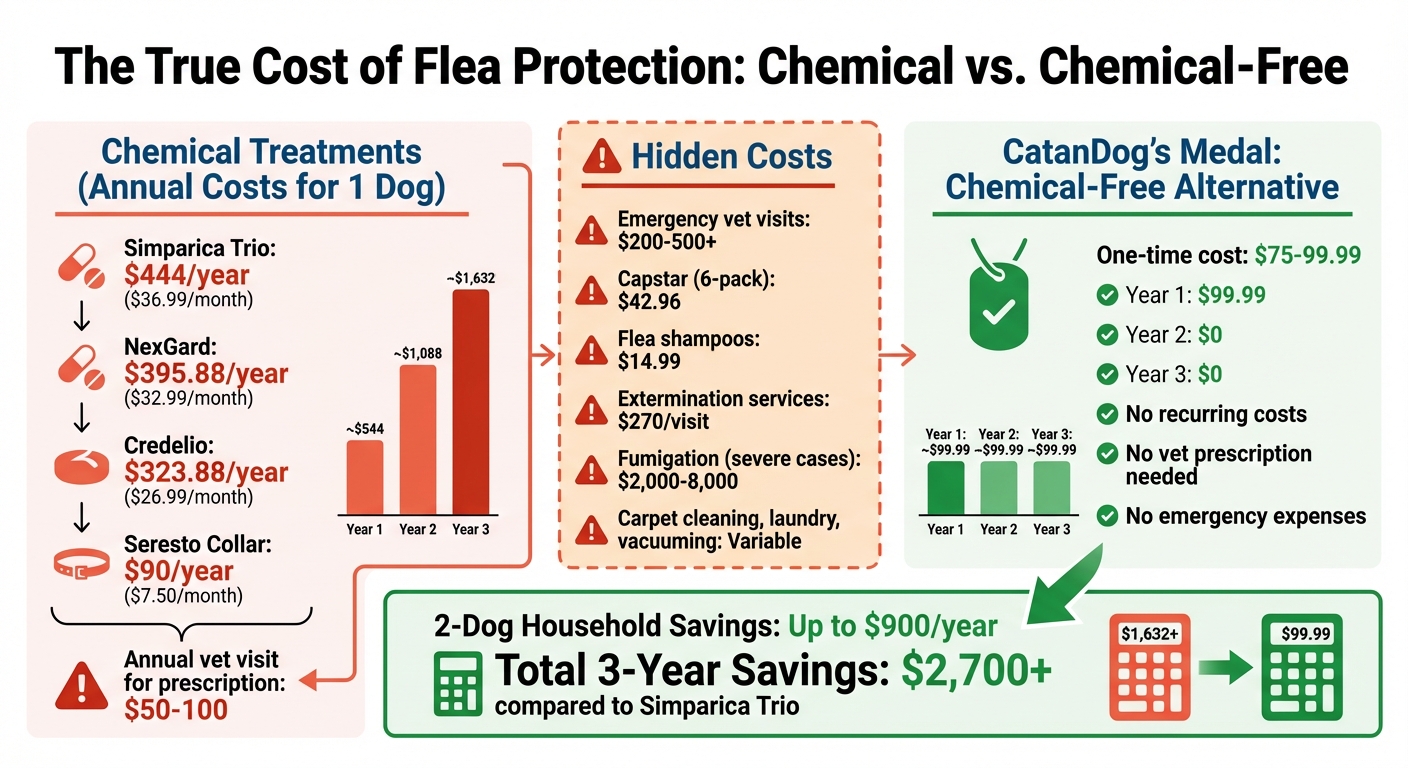
Annual Cost Comparison: Chemical Flea Treatments vs CatanDog's Medal
Monthly Treatment Expenses
The price tag on flea treatments often hides the full financial commitment. For instance, popular oral preventatives like Simparica Trio cost $36.99 per month, NexGard is $32.99, and Credelio comes in at $26.99. On top of that, these medications require annual vet visits for prescriptions.
Now, imagine you have two dogs. With Simparica Trio, you're looking at an annual expense of $888, and that’s just for the medication - not including any unexpected complications. Even so-called budget options, like the Seresto collar, which averages $7.50 per month, require an upfront payment of around $60. And when these treatments fail, the financial strain only grows.
Emergency Veterinary Expenses
Beyond the routine costs, adverse reactions to chemical treatments can lead to significant, unplanned expenses. Smaller dogs, in particular, may experience side effects like rashes, vomiting, diarrhea, or even seizures, often necessitating emergency vet visits that can run into hundreds of dollars.
If the treatment itself fails to control fleas, additional costs pile up. For example:
- Capstar: $42.96 for a six-pack
- Specialized flea shampoos: $14.99
- Extermination services: $270 per visit, on average
- Fumigation: Between $2,000 and $8,000 in severe cases
And don’t forget the indirect costs: frequent laundry loads, constant vacuuming, and sometimes even professional carpet cleaning. These hidden expenses can add up quickly.
Annual Cost Comparison
When you tally up everything, the numbers are eye-opening. For a single dog, comprehensive oral medication costs anywhere from $264 to $444 annually. Now, compare that to a chemical-free alternative like the CatanDog's Medal. This solution eliminates recurring monthly costs, prescription renewals, and the hidden expenses tied to chemical treatments. Its bio-resonance technology offers long-lasting protection without the need for constant repurchasing.
Switching to a chemical-free approach doesn’t just save money on the medication itself - it also helps avoid costly emergency vet visits, extermination fees, and other related expenses. If you have two dogs, moving away from Simparica Trio to a one-time, chemical-free solution could save you nearly $900 every year.
Health Risks for Pets and Families
Common Side Effects in Pets
Chemical flea treatments can pose serious health risks, particularly for small dogs. Dogs weighing between 10 and 20 pounds are especially vulnerable to adverse effects, which may include rashes, vomiting, diarrhea, and even seizures. Treatments containing isoxazoline - found in products like Bravecto, NexGard, and Simparica - have been linked to neurological issues such as muscle tremors, lack of coordination, and seizures.
Topical treatments aren't without their dangers either. These can lead to skin irritation, redness, itching, hair loss, and, in severe cases, chemical burns at the application site. In extreme situations, exposure to these chemicals has resulted in liver failure, kidney failure, respiratory distress, and even death.
"One commonly seen pet reaction is panic which... I interpret as a state of terror caused by the neuro-excitatory effects of some insecticides, sometimes manifest also as transient tremors and ataxia, other times permanent damage with epileptiform seizures or death." - Dr. Michael W. Fox, Veterinarian and Ethologist
The risks are even greater when these treatments are applied incorrectly.
Dangers of Incorrect Application
Misusing flea treatments significantly increases the chances of harm. For instance, permethrin, a common ingredient in dog flea products, is highly toxic to cats and can be fatal. Between 2012 and June 2020, the EPA received over 75,000 incident reports related to Seresto collars, including at least 1,698 pet deaths and nearly 1,000 cases of human harm.
Dosing mistakes, such as using adult-strength products on kittens or puppies, heighten the risk of poisoning. Applying topical treatments incorrectly, like failing to place them at the base of the skull, can allow pets to lick and ingest the chemicals during grooming. Oral medications carry their own risks, as they can be absorbed at rates of up to 92%. Once ingested, these chemicals cannot be removed, leaving pets vulnerable if a reaction occurs.
But it’s not just pets who are at risk - these chemicals can also affect the humans in the household.
Chemical Exposure Risks for Household Members
Residues from flea collars and topical treatments don’t just stay on pets. They can transfer to carpets, furniture, and even family members. Children are particularly at risk because their developing nervous systems are more sensitive, and they often put their hands in their mouths after petting animals.
"Residue levels produced by some flea collars are so high that they pose a risk of cancer and damage to the neurological system of children up to 1,000 times higher than the EPA's acceptable levels." - Miriam Rotkin-Ellman, Senior Scientist, NRDC
In fact, some pet products expose families to pesticide levels up to 500 times above EPA safety limits. Over a four-year span ending in 1996, poison control centers documented around 25,000 cases of children under age 6 being exposed to organophosphate pesticides, leading to hundreds of hospitalizations. These chemicals, derived from nerve gas, interfere with nerve signal transmission in both insects and humans. The long-term health risks include cancer, brain dysfunction, and respiratory issues.
How Chemical Treatments Harm the Environment
Chemical Contamination of Water Sources
When you bathe a pet treated with chemical flea products, harmful neurotoxic chemicals can seep into local water systems. Two common ingredients in these treatments, fipronil and imidacloprid, often find their way into rivers and streams through household drains, washed pet bedding, and even pets swimming in natural water bodies. A study led by Professor Dave Goulson of the University of Sussex analyzed 3,861 chemical samples from 20 English rivers between 2016 and 2018. The findings were alarming: fipronil was present in 98.6% of samples, imidacloprid in 65.9%, and fipronil sulfone - a toxic byproduct - was detected at concentrations 38.1 times higher than its chronic toxicity limit. Since the 1990s, over 27,471 kg of fipronil and 33,036 kg of imidacloprid have been sold in the UK for flea treatments. Shockingly, bathing a single treated dog can release anywhere from 3.6 mg to 230.6 mg of these chemicals into the water - levels that conventional wastewater treatment systems simply cannot filter out.
This contamination not only degrades water quality but also poses a serious risk to aquatic ecosystems.
"Veterinary flea products are a potential source of pollution and ecosystem harm."
- Dave Goulson, Professor of Biology, University of Sussex
Damage to Wildlife and Aquatic Ecosystems
The harm doesn’t stop at water contamination. These chemicals wreak havoc on aquatic life by accumulating in waterways and decimating invertebrates, which are crucial to aquatic food chains. Fipronil and imidacloprid target insect nervous systems, making them lethal to many beneficial aquatic insects. As invertebrate populations dwindle, fish lose a key food source, and birds that rely on these fish face starvation.
"Fipronil and its toxic metabolites were found to be ubiquitous in English freshwater environments, with the majority of measurements occurring at concentrations that exceed environmental toxicity limits."
- Science of The Total Environment
What makes this issue even more troubling is that some of these chemicals were banned for agricultural use due to their toxicity, yet they continue to pollute waterways via household pet treatments. Adding to the problem is the widespread use of flea treatments as a precaution - even when pets show no signs of infestation - further amplifying environmental damage.
CatanDog's Medal: A Chemical-Free Protection Solution
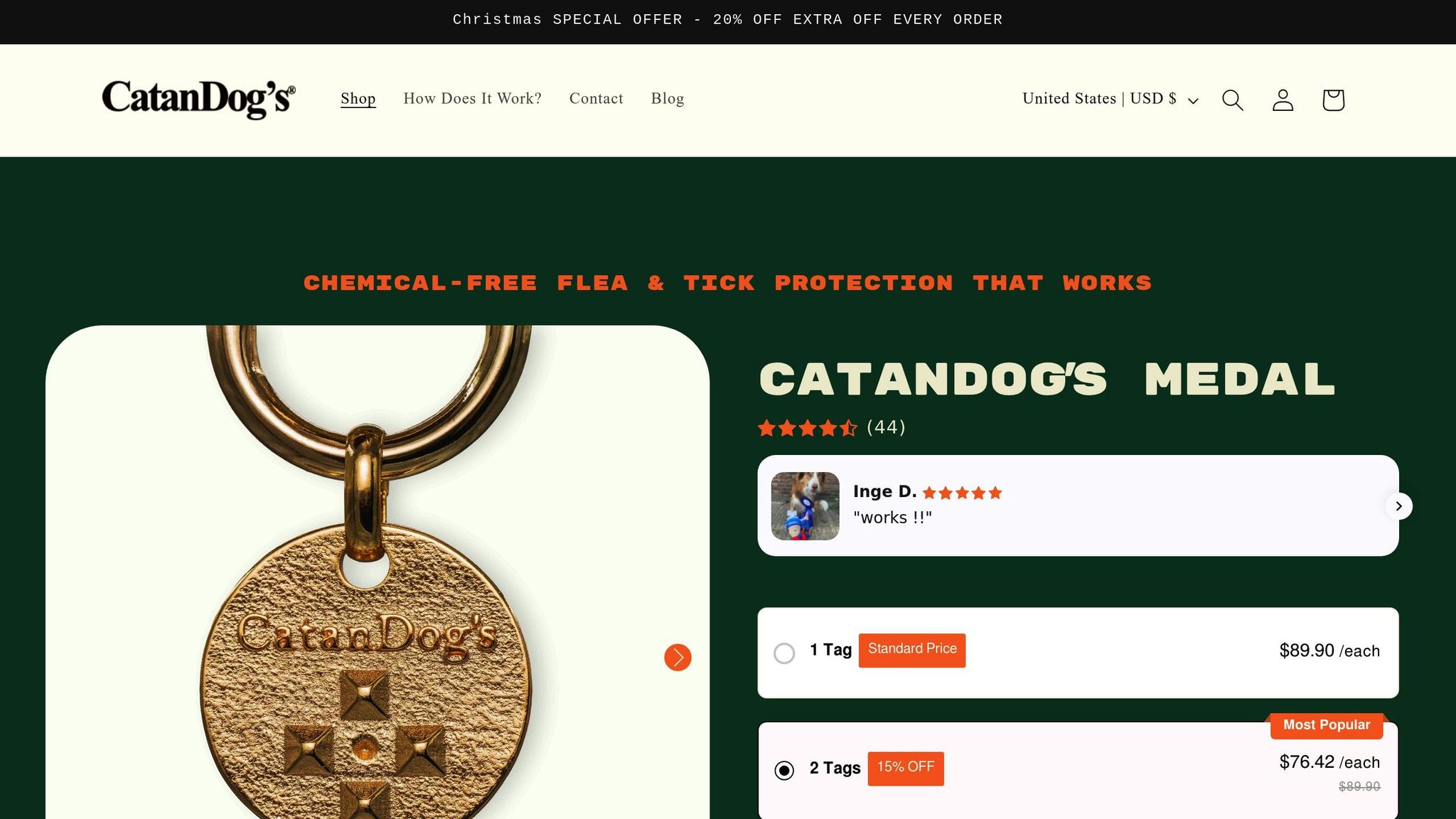
Chemical flea treatments often come with hidden health risks and ongoing costs, but the CatanDog's Medal steps in as a safer, hassle-free alternative.
How Bio-Resonance Technology Works
The CatanDog's Medal, available at catandogs.shop, offers a fresh approach to flea and tick prevention. Instead of relying on harmful neurotoxic chemicals, this medal uses bio-resonance technology to naturally repel parasites. No batteries, no monthly applications, no refills - just clip it onto your pet’s collar, and it gets to work.
By avoiding pesticides, it protects not just your pet but also your entire household - especially children - from exposure to harmful chemicals. It's safe for pets of all ages, sizes, and health conditions, including vulnerable groups like puppies, kittens, senior pets, and pets with pre-existing medical issues. These groups are often the most at risk for adverse reactions to chemical treatments. This chemical-free solution not only prioritizes safety but also eliminates the need for recurring purchases, making it a practical and economical choice.
Long-Term Cost Savings
The financial benefits are hard to ignore. Priced at $99.99 for one unit, with discounts bringing the cost down to $85.00 for two and $75.00 for three, the CatanDog's Medal is a one-time investment that replaces the need for monthly treatments.
Americans collectively spend over $1 billion every year on flea and tick control products, while global spending exceeds $15 billion annually. Most of this money is spent on products that need frequent repurchasing. The CatanDog's Medal eliminates this cycle, offering consistent, long-term protection without the added expense.
Features That Stand Out
This medal is built for real-life use. Its waterproof design ensures it keeps working during swims, baths, or playtime in the rain. Made from durable, eco-conscious jewelry-grade Zamak, it’s designed to last. And because it’s completely free of chemicals, it avoids the risks of skin irritation, seizures, or even organ damage - concerns tied to traditional treatments. In fact, over 44,000 adverse event reports were filed with the EPA in 2008 alone, all linked to spot-on pesticide products.
Safe for pets of any size and for households with children, the CatanDog's Medal offers a worry-free solution to flea and tick prevention - without the risks that come with chemical treatments.
Conclusion
Chemical treatments for pets come with hidden costs that go beyond the price tag. Americans collectively spend over $1 billion each year on these products. However, the expenses don’t stop there - recurring purchases, frequent vet visits, and pesticide residues (sometimes reaching levels up to 50,000% higher than EPA safety limits) add to the financial and health burdens. This is especially concerning for children who often have close contact with pets.
The environmental impact is equally troubling. These chemicals pollute water sources, harm wildlife, and require costly hazardous waste disposal. On top of that, many of the pesticides found in pet products have been linked to serious health issues like cancer, neurological damage, and respiratory problems in humans.
In light of these risks, a safer and more sustainable option is gaining attention: the CatanDog's Medal, available at catandogs.shop. This product uses bio-resonance technology to provide flea and tick protection without the use of harmful chemicals. It’s a one-time investment, priced between $75.00 and $99.99, offering long-lasting protection for your pet and peace of mind for you.
FAQs
What health risks do chemical flea treatments pose to pets and families?
Chemical flea treatments can leave behind residues that might be harmful to both pets and their families. Many of these treatments rely on neurotoxic chemicals like tetrachlorvinphos and propoxur. These substances can harm the brain and nervous system, increase the likelihood of cancer, and even lead to acute poisoning. Children are especially at risk since they often touch pets and may accidentally ingest these toxins.
Beyond direct exposure, chemicals such as fipronil and imidacloprid can remain on pets' skin and household surfaces for weeks, creating additional exposure risks. These residues don’t just stay indoors - they can seep into water systems and disrupt ecosystems, causing broader environmental harm.
For those looking for a safer option, the CatanDog’s Medal provides a natural, chemical-free way to protect pets from fleas and ticks. It offers long-lasting protection without the dangers associated with pesticides.
What are the environmental risks of using chemical flea treatments?
Chemical flea treatments often rely on synthetic pesticides such as fipronil, imidacloprid, and tetrachlorvinphos. While effective against fleas, these substances don’t just stay on your pet - they can wash off during baths or rain, eventually making their way into the soil and waterways via storm drains. Once in rivers and streams, these chemicals can harm aquatic life and disrupt local ecosystems. The impact doesn’t stop there; pesticide residues can drift into surrounding areas, posing risks to beneficial insects like bees and butterflies.
Although the U.S. Environmental Protection Agency (EPA) evaluates the environmental risks of these treatments, repeated use can still lead to lasting ecological harm due to the toxicity of these chemicals. If you're looking for a safer option, catandogs.shop provides a chemical-free flea and tick solution that keeps your pets protected without compromising the environment.
How does CatanDog’s Medal save money compared to chemical flea treatments?
Traditional flea treatments often need to be reapplied every month, costing pet owners $15–$30 monthly - or $180–$360 annually for just one pet. On top of that, there are often hidden expenses, like vet bills from potential side effects or the environmental impact of pesticide residues left behind.
The CatanDog’s Medal offers a chemical-free, long-term alternative that eliminates the hassle and expense of monthly treatments. With a one-time purchase, pet owners can save money while keeping their pets safe, without the risks tied to traditional chemical options.