

How to Clean Floors Without Chemicals: Pet-Safe Tips
Pets spend a lot of time on floors, which makes it crucial to clean them without harmful chemicals. Many traditional cleaners contain ingredients like bleach, ammonia, and hydrogen peroxide that can irritate pets or harm their health. Instead, you can use natural solutions like vinegar, baking soda, castile soap, and lemon juice to keep floors clean and safe. These options are affordable, easy to use, and effective for different floor types.
Key Takeaways:
- Vinegar: Great for tile and vinyl; mix with water for a quick clean.
- Baking Soda: Tackles odors and stains; use sparingly on hardwood.
- Castile Soap: Works on most sealed surfaces; mix with water for a gentle solution.
- Lemon Juice: Adds antibacterial properties but avoid on stone floors.
- Steam Mops: Chemical-free and effective for sealed surfaces.
Switching to these natural methods not only protects your pets but also reduces exposure to harsh residues. Combine these tips with simple habits like using doormats and cleaning spills quickly to maintain a safer, cleaner home.
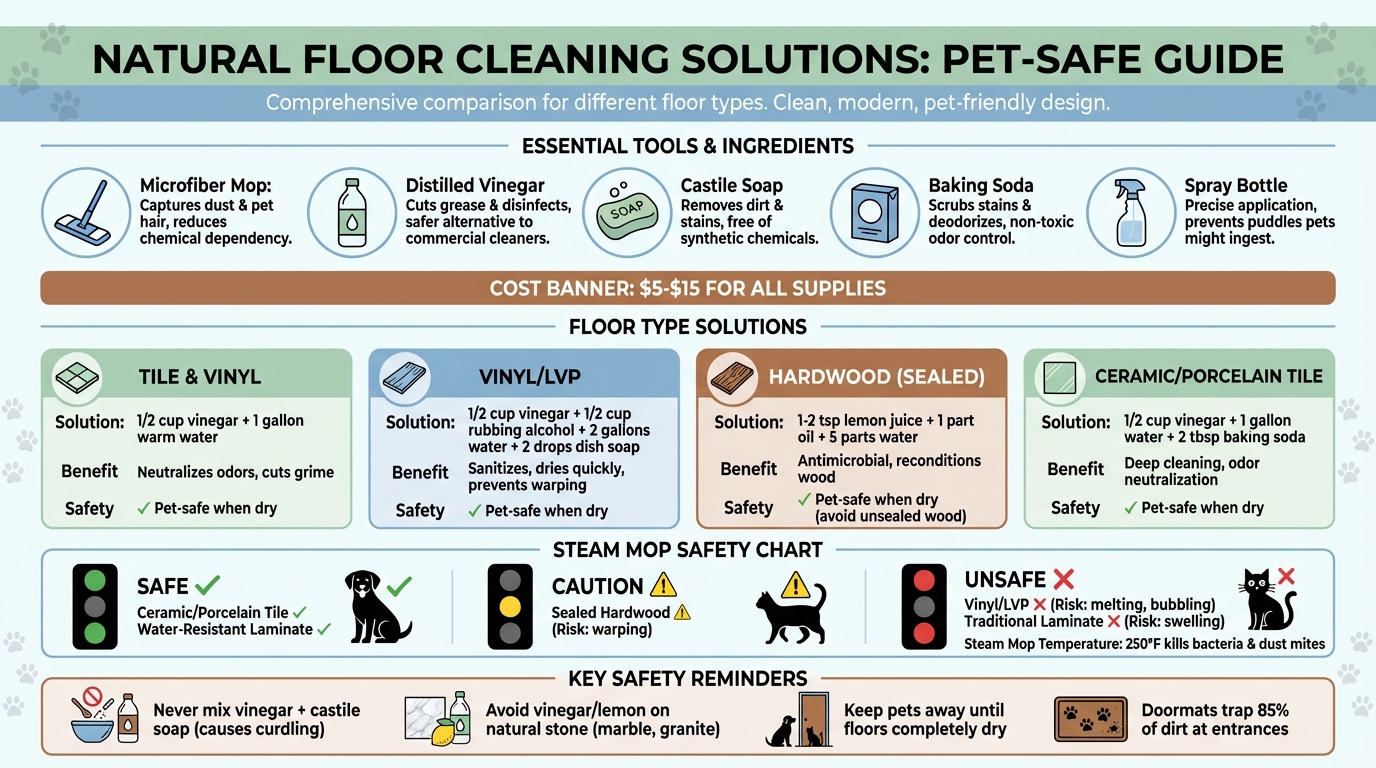
Natural Floor Cleaning Solutions Guide for Pet-Safe Homes
Easy DIY Dog Friendly Floor Cleaner
Tools and Ingredients You'll Need
Keeping your floors clean without relying on harsh chemicals is both simple and affordable. For just $5 to $15, you can gather everything you need to maintain a spotless home while minimizing your pets' exposure to potentially harmful substances. Below, let's cover the essential tools and natural ingredients that make this possible.
Cleaning Tools
Start with microfiber mops, which are perfect for capturing dust, grime, and pet hair without requiring any detergents. These mops also use less water, making them a safer option for moisture-sensitive surfaces like hardwood floors.
A spray bottle is another must-have. It allows for precise application of cleaning solutions, helping you avoid oversaturating your floors, which could lead to damage. Add a vacuum with a floor brush attachment to your toolkit for a quick and thorough cleanup. To ensure you're not spreading dirty water around, consider using a two-bucket system - one bucket for the cleaning solution and another for rinsing.
Natural Cleaning Ingredients
One of the most versatile natural cleaners is distilled white vinegar. According to Alisha Firestone-White, Co-owner of Northwest Housekeeping:
"Distilled white vinegar is an ideal cleaning solution for floors, because the acidity helps to cut through grease, dirt, and grime".
Once the scent fades, it leaves no harmful residues behind, making it a safe option for pets.
Baking soda is another handy ingredient, offering gentle scrubbing power to remove stains and neutralize odors. However, it should be used sparingly on delicate surfaces to avoid scratching. For a plant-based option, Castile soap - made from olive oil - effectively lifts dirt and stains without any synthetic chemicals, making it especially suitable for sealed hardwood floors. Lemon juice, with its citric acid, brings antibacterial properties to the table and works well on tiles and vinyl. Just remember to skip vinegar and lemon juice on natural stone floors like marble or granite, as their acidity can damage the surface.
Here’s a quick breakdown of these tools and ingredients:
| Tool/Ingredient | Purpose | Pet Safety Benefit |
|---|---|---|
| Microfiber Mop | Captures dust and pet hair effectively | Reduces dependency on chemical cleaners; dries quickly |
| Distilled Vinegar | Cuts through grease and disinfects | A safer alternative to commercial disinfectants |
| Castile Soap | Removes dirt and stains | Free of synthetic chemicals, gentle on floors |
| Baking Soda | Scrubs stains and deodorizes | Non-toxic and safe for odor control |
| Spray Bottle | Allows precise application of solutions | Prevents puddles that pets might slip on or ingest |
With these tools and ingredients, you’ll have everything you need to clean your floors effectively while keeping your pets safe.
How to Clean Different Floor Types
Keeping your floors clean without using harsh chemicals is easier than you might think. With the right natural solutions, you can protect your floors, maintain a safe environment for your pets, and still achieve a sparkling clean finish. The trick? Use the right method for each floor type and apply it carefully to avoid damage.
Vinegar Solution for Tile and Vinyl
For tile floors, a simple vinegar solution works wonders. Mix 1/2 cup of distilled white vinegar with 1 gallon of warm water. If you're dealing with stubborn grime, add 1–2 tablespoons of dish soap to boost its cleaning power. This mix effectively breaks down dirt and leaves your tiles looking fresh.
Vinyl floors need a slightly different approach. Combine 1/2 cup vinegar, 1/2 cup rubbing alcohol, and 2 drops of dish soap with 2 gallons of water. The rubbing alcohol helps the solution evaporate quickly, which is crucial for preventing moisture from seeping into the subfloor and causing warping. Always use a damp mop - never soaking wet - since too much water can damage vinyl by causing it to bubble.
Before mopping either surface, sweep or vacuum to remove any grit that could scratch the flooring. Once you're done, you're ready to explore how baking soda can handle hardwood floors and pesky odors.
Baking Soda for Hardwood and Odors
Baking soda is a natural powerhouse for cleaning, but it’s important to use it carefully on hardwood floors. For small pet stains or odors, mix baking soda with a little warm water to form a thick paste. Gently apply it with a microfiber cloth, but avoid scrubbing too hard to prevent scratches. Wipe the paste away with a damp cloth and dry the area thoroughly.
If you’re tackling general odors on hard surfaces like tile, dissolve 2 tablespoons of baking soda in 1 gallon of warm water. This solution neutralizes smells without leaving behind any residue.
Lemon Juice for Sealed Surfaces
Lemon juice not only smells amazing but also has natural antimicrobial properties. Since it’s acidic, you’ll need to dilute it properly to avoid damaging your floors. For sealed wood floors, mix 1–2 teaspoons of lemon juice with 1 part neutral oil (like olive or avocado oil) and 5 parts warm water. This blend reconditions the wood while leaving a pleasant scent.
For laminate floors, create a mix of 2 tablespoons of lemon juice, 2 parts warm water, and 2 parts white vinegar. Apply this solution sparingly with a damp microfiber cloth to avoid over-saturating the surface.
Looking for an all-purpose sanitizing spray? Combine 5 drops of lemon juice with 2 cups warm water, 1/2 cup white vinegar, and 1/4 cup rubbing alcohol. This spray adds a refreshing touch to your cleaning routine while complementing other methods. After cleaning, always let the floor dry completely before allowing pets back into the area to prevent them from coming into contact with the solution. And remember, lemon juice should never be used on unsealed or acid-sensitive surfaces - test it on a hidden spot first if you’re unsure about your floor’s finish.
| Floor Type | Natural Cleaning Solution Recipe | Key Benefit |
|---|---|---|
| Ceramic/Porcelain Tile | 1/2 cup vinegar + 1 gallon warm water + 2 tbsp baking soda | Neutralizes odors and cuts grime |
| Vinyl / LVP | 1/2 cup vinegar + 1/2 cup rubbing alcohol + 2 gallons water + 2 drops dish soap | Sanitizes and dries quickly to prevent warping |
| Sealed Surfaces | 1–2 tsp lemon juice + 1 part oil + 5 parts water | Adds antimicrobial properties and fresh scent |
sbb-itb-861ee2e
Steam Mop Deep Cleaning
Steam mops offer a chemical-free cleaning option, making them a great alternative to traditional cleaning methods. These devices heat water in an internal reservoir to around 250°F, producing steam that can kill most bacteria, germs, and dust mites on contact. This approach works hand-in-hand with natural cleaning solutions, tackling bacteria without the need for chemical additives.
"The heat of steam mops kills most of the bacteria and dust mites on the floor." - Mariette Mifflin, Product Tester and Housewares Expert
Before using a steam mop, sweep or vacuum your floors first. Skipping this step can turn dirt into sticky mud, making the cleaning process less effective. Steam mops are best suited for sealed surfaces like ceramic tile, porcelain, and linoleum. On the other hand, they can harm luxury vinyl planks (LVP), unsealed hardwood, or traditional laminate by causing issues like warping, bubbling, or even melting. If you're unsure about your flooring, test the mop on a hidden spot to avoid surprises.
While cleaning, keep the steam mop moving at all times. Letting it sit in one spot for too long can lead to damage from the concentrated heat and moisture. For best results, use distilled water to prevent mineral buildup in the mop and replace microfiber pads as soon as they become dirty.
Steam mopping is also a safe choice for households with pets, as it avoids leaving behind toxic residues. However, it's essential to keep pets in another room during the cleaning process to prevent burns. Once you've finished, wait until the floor is completely dry before letting pets back onto it. This helps prevent slips and protects their paws from residual heat.
| Floor Type | Steam Mop Safety | Primary Risk |
|---|---|---|
| Ceramic/Porcelain Tile | Safe | Minimal; may require grout resealing |
| Sealed Hardwood | Use Caution | Warping and finish damage |
| Vinyl/LVP | Unsafe | Melting, bubbling, and discoloration |
| Water-Resistant Laminate | Safe | Minimal if joints are well-sealed |
| Traditional Laminate | Unsafe | Core layer swelling and joint damage |
Castile Soap All-Purpose Cleaner
Adding to the lineup of natural cleaning methods like vinegar, baking soda, and steam mops, castile soap is a plant-based, pet-friendly option that works on a variety of floors - vinyl, sealed tile, hardwood, and laminate. This soap is excellent at cutting through grease and dirt without leaving behind harmful residues.
To create a cleaning solution, mix 2 cups of water with 1/2 teaspoon of castile soap in a spray bottle. For larger jobs like mopping, use 2 tablespoons of castile soap per gallon of water. Dr. Bronner's Pure-Castile Liquid Soap, priced around $16, can yield nearly 200 batches of floor cleaner.
"Castile soap, like Dr. Bronner's, naturally lifts grease and dirt, making it great both for spot treatments and all-over cleaning." – Ayn-Monique Klahre, Lifestyle Editor, The Kitchn
Want to add a pleasant scent? Include 2–4 drops of pet-safe essential oils per 16 ounces of solution. For homes with both cats and dogs, safe options include Lavender, Cedarwood, Chamomile, Frankincense, Jasmine, and Rose. However, avoid essential oils like Tea Tree, Peppermint, Cinnamon, and Pine, as they can be toxic to cats. For a 1-gallon bucket, around 15 drops total will do the trick. This mixture is ideal for both spot cleaning and regular mopping, offering a safe, chemical-free way to care for your floors.
When cleaning, be sure to rinse thoroughly to avoid streaks or residue. Use a two-bucket system: one for the castile soap solution and another with clean water. Rinse your mop well after each pass and re-mop with clean water to remove any leftover soap. For vinyl or sealed tile floors, you can finish with a 1:4 vinegar-to-water rinse, but never mix vinegar and castile soap together - the acid will cause the soap to curdle. For hardwood, laminate, or unsealed tile, stick to a final rinse with plain hot water. Lastly, keep pets out of the area until the floors are completely dry.
Conclusion
Following our step-by-step guide, these methods not only ensure spotless floors but also create a safer space for your pets. With just a few basic household ingredients, you can whip up effective, chemical-free cleaning solutions that work as well as store-bought options. The best part? They clean away dirt and grime without leaving behind harmful residues.
Pets spend a lot of time in direct contact with floors, which increases their risk of exposure to toxic residues. When they walk on freshly cleaned surfaces, these residues can irritate their skin or cause problems if ingested during grooming. Switching to natural cleaning methods eliminates chemicals like ammonia and bleach, protecting your pet's health while keeping your floors pristine.
"By eliminating harsh floor cleaners in favor of [natural alternatives], you'll help avoid accidental poisonings while safeguarding your pets (and the entire family) from the possible health detriments of cumulative chemical exposure." – Marilee Nelson, Environmental Toxins Expert, Branch Basics
Simple habits can also make a big difference. Placing doormats at entrances can trap up to 85% of dirt before it reaches your floors. Enforcing a no-shoes policy and cleaning up spills right away reduces the need for heavy-duty cleaning later. These small changes, combined with natural cleaning solutions, help create a healthier home for everyone - pets, kids, and adults alike.
You can take your chemical-free approach even further by considering natural solutions for pest prevention. For example, the CatanDog's Medal, available at catandogs.shop, uses bio-resonance technology to form a natural barrier against fleas and ticks. It’s a battery-free, chemical-free way to keep your pets safe from parasites while maintaining the toxin-free environment you've worked so hard to create.
FAQs
Are natural cleaning solutions safe for all types of floors?
Natural cleaning solutions can be a great option for most types of floors, but using them the right way is crucial to avoid causing damage. For instance, a mixture of vinegar and water works well for tile, vinyl, and laminate flooring. However, it’s best to use this combination sparingly on hardwood floors, as it can harm the finish if not handled carefully. Proper dilution of your ingredients is essential to protect your floors.
When it comes to hardwood, a gentler approach is often better. A diluted solution of Castile soap is a safer alternative for maintaining these surfaces. Always take a moment to check the manufacturer’s care guidelines for your specific flooring type. And before diving in, test any homemade cleaner on a small, inconspicuous area to ensure it’s safe to use. This quick precaution can help you maintain clean, pet-friendly floors without the risk of damage!
Are essential oils safe to use in pet-friendly floor cleaning solutions?
When it comes to cleaning solutions and pets, essential oils are generally a no-go. Oils like tea tree oil can be harmful to animals, potentially leading to serious issues such as liver damage or neurological problems. Pets can easily come into contact with these substances by walking on treated surfaces and then licking their paws, which makes exposure even riskier.
For a pet-safe alternative, opt for natural options like diluted vinegar or baking soda. These are effective cleaners and much gentler for your furry companions. To keep your home safe, it’s best to steer clear of essential oils in your cleaning routine unless they’re explicitly labeled as safe for pets.
How can I safely clean my floors with natural products without causing damage?
To keep your floors clean naturally without risking damage, it's essential to match your cleaning approach to the type of flooring you have.
For hardwood floors, avoid soaking them with water or using undiluted vinegar - both can harm the finish or even cause warping. Instead, opt for a damp mop paired with a diluted mix of water and either a small amount of vinegar or a gentle dish soap. The key here is to ensure your mop is only slightly damp, preventing moisture from seeping into the wood.
When it comes to tile or ceramic floors, steer clear of abrasive scrubbers that could scratch the surface. Wring out your mop or cloth thoroughly to avoid standing water, which can damage grout or leave streaks. Regular sweeping or vacuuming before mopping is a smart move to remove dirt and debris that might otherwise scratch the tiles.
If you're making your own cleaning solutions, stick to recommended ratios and avoid mixing chemicals like vinegar with ammonia or bleach, as this can create harmful fumes. Whether you're cleaning wood or tile, using soft tools and keeping moisture levels in check will help you maintain your floors while sticking to natural cleaning methods.