

Chemical-Free vs. Traditional Flea Treatments: Comfort Comparison
When choosing flea treatments for pets, comfort is a major concern. Fleas cause itching, skin issues, and distress, but both chemical-based and chemical-free options have pros and cons. Here's a quick breakdown:
- Chemical-Based Treatments: Spot-ons, pills, and collars kill fleas quickly using synthetic pesticides. However, they can cause side effects like skin irritation, vomiting, and even neurological problems, especially in smaller pets.
- Chemical-Free Options: Natural methods like essential oils, diatomaceous earth, or bio-resonance devices avoid toxins, reducing risks of adverse reactions. These treatments focus on repelling fleas but may require frequent application and work slower.
Quick Comparison
| Feature | Chemical-Based Treatments | Chemical-Free Treatments |
|---|---|---|
| Effectiveness Speed | Fast (kills fleas quickly) | Slower (focuses on prevention) |
| Side Effects | Higher risk (skin, GI, neurological) | Lower risk (mild botanical issues) |
| Ease of Use | Monthly or long-lasting collars | Frequent reapplication needed |
| Long-Term Safety | Potential residue buildup | Non-toxic, safer for long-term use |
Chemical-free methods are safer for pets and families, while chemical treatments offer quicker relief. Your choice depends on balancing immediate results with long-term safety.
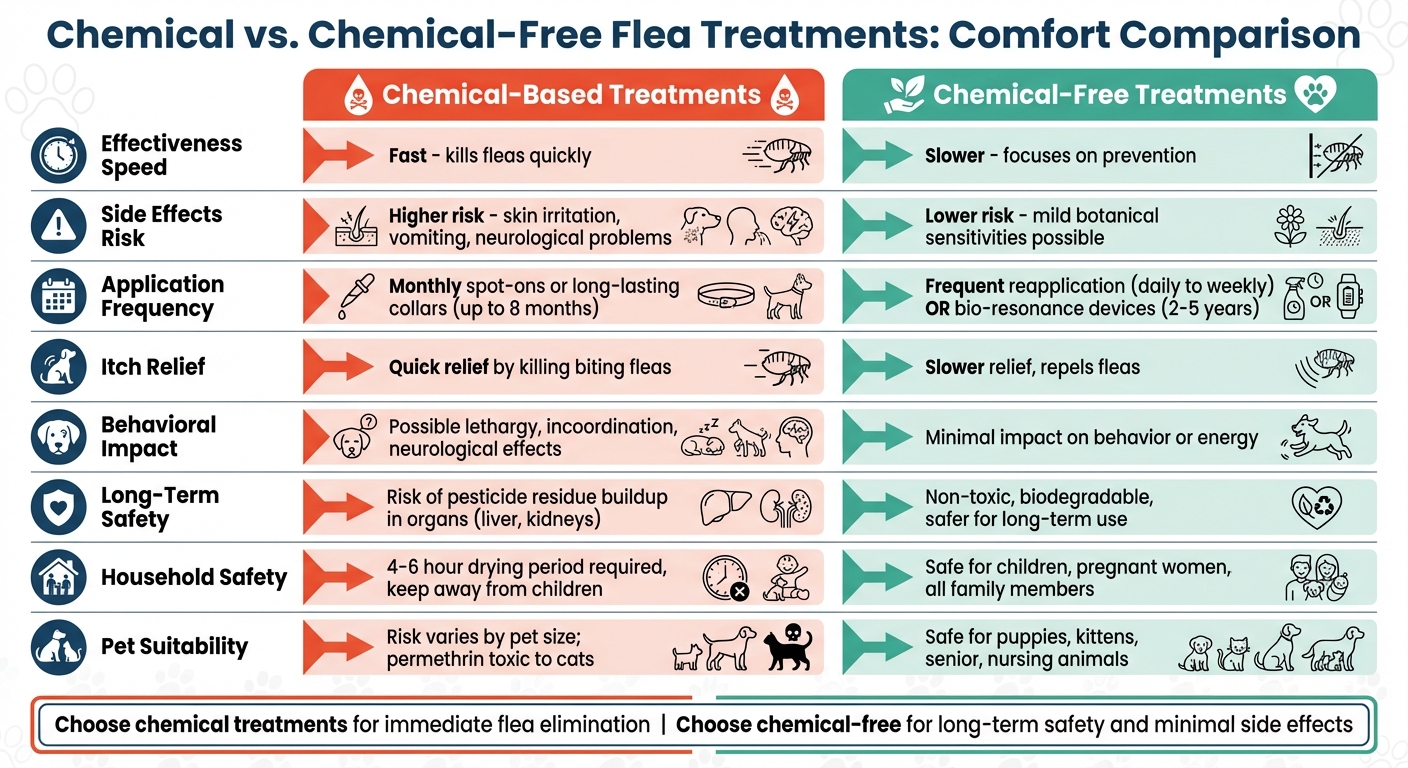
Chemical vs Chemical-Free Flea Treatments: Complete Comfort Comparison Chart
Traditional Flea Treatments Explained
How Traditional Treatments Work
Traditional flea treatments generally come in three forms: topical spot-ons, oral medications, and flea collars. These methods use chemicals to target and kill fleas, each working in a slightly different way.
Spot-on treatments are liquid pesticides applied directly to your pet’s skin, typically between the shoulder blades. While many people believe these products stay on the skin’s surface, the Environmental Protection Agency (EPA) has clarified:
"Many of the topically administered products currently regulated by EPA do not remain on the skin and are absorbed into the bloodstream, highlighting challenges with the current approach and raising different safety concerns than originally anticipated." - Environmental Protection Agency (EPA)
Oral medications work internally. After your pet ingests a pill or chewable tablet, the active chemicals enter their bloodstream. When a flea bites, it ingests the chemical and dies. For instance, products like Credelio Quattro can eliminate 99% of fleas within eight hours. Flea collars, on the other hand, release pesticides or growth inhibitors around your pet’s neck over time, providing protection for several months.
These treatments rely on chemicals that either disrupt a flea’s nervous system (adulticides) or prevent development (Insect Growth Regulators or IGRs, such as methoprene and pyriproxyfen). While effective, these chemicals can sometimes lead to discomfort or side effects for pets.
Comfort Problems with Traditional Methods
Although these treatments can effectively control fleas, they can also cause discomfort for pets. Skin reactions are a frequent issue. Pets may experience redness, swelling, itching, or even hair loss where the treatment is applied. For example, clinical trials for Selamectin reported that around 1% of treated cats experienced temporary hair loss, sometimes accompanied by inflammation.
Gastrointestinal upset is another common problem, especially with oral medications. Vomiting, diarrhea, and reduced appetite are typical symptoms, which can lead to dehydration and leave pets feeling unwell for days.
The most concerning side effects, however, are neurological symptoms. Some pets may experience lethargy, tremors, loss of coordination, or even seizures. The U.S. Food and Drug Administration (FDA) highlights the importance of monitoring for these signs:
"Look for dizziness, wobbliness, incoordination, poor appetite, depression, vomiting, diarrhea, or excessive salivation. Some animals have had seizures and/or died." - U.S. Food and Drug Administration
Certain chemicals, like permethrin, are particularly dangerous for cats. Even indirect exposure, such as grooming a dog treated with permethrin, can result in life-threatening symptoms like seizures and tremors.
Side Effects and Comfort Ratings Comparison
| Side Effect Category | Common Symptoms | Impact on Pet Comfort |
|---|---|---|
| Skin Reactions | Redness, itching, swelling, hair loss, blisters, scabbing | High; causes persistent scratching and potential secondary skin infections |
| Gastrointestinal | Vomiting, diarrhea (sometimes with blood), decreased appetite | Moderate to High; leads to dehydration and general malaise |
| Neurological | Lethargy, tremors, incoordination, seizures, dizziness | Very High; can be life-threatening and causes significant distress |
| Behavioral | Anxiousness, depression, excessive salivation | Moderate; indicates systemic stress or discomfort |
The American Veterinary Medical Association (AVMA) also warns about another issue that can impact a pet’s comfort:
"Flea and tick preventives and some medications can interfere with each other, resulting in unwanted side effects, toxicities, or even ineffective doses." - American Veterinary Medical Association (AVMA)
sbb-itb-861ee2e
Chemical-Free Flea Treatment Options
Common Chemical-Free Methods
When it comes to flea prevention, many pet owners are turning to natural solutions that avoid pesticides. These methods not only prioritize your pet's safety but also aim to keep fleas at bay effectively. For instance, essential oils like cedarwood, lavender, lemongrass, and peppermint can repel fleas, with cedarwood being particularly effective by interfering with flea pheromones. Another option is diatomaceous earth (DE) - a fine powder derived from fossilized algae. Its tiny, sharp edges physically damage flea exoskeletons, causing dehydration and death.
Apple cider vinegar offers a different approach by creating an acidic environment on your pet's skin that fleas dislike, though it doesn’t kill them directly. Herbal collars infused with essential oils such as cedar or lavender provide a consistent repellent effect around your pet’s neck. For outdoor areas, beneficial nematodes - tiny organisms that feed on flea larvae in soil - can reduce flea populations by as much as 90% when applied properly. Lastly, bio-resonance devices like the CatanDog's Medal use energy fields to repel parasites without involving any chemicals.
Next, let’s explore how these methods contribute to your pet’s overall comfort.
Comfort Benefits of Chemical-Free Methods
Natural flea treatments stand out by avoiding toxic residues, which can irritate your pet's skin or cause internal side effects. Dr. Jean Hofve, a holistic veterinarian, explains:
"All pesticides pose some degree of health risk to humans and animals. Despite advertising claims to the contrary, both over-the-counter and veterinarian-prescribed flea-killing topical treatments are pesticides that enter our companions' internal organs (livers, kidneys), move into their intestinal tracts, and are eventually eliminated in their feces and urine." - Dr. Jean Hofve, Holistic Veterinarian, DVM
Unlike chemical treatments, natural options like geraniol - a geranium flower extract proven to repel fleas more effectively than citronella - can also help soothe irritated skin caused by flea bites. Additionally, methods like diatomaceous earth work through dehydration rather than neurotoxic chemicals, ensuring fleas don’t develop resistance over time.
Below is a comparison of how these chemical-free methods impact your pet's comfort.
Chemical-Free Treatment Comfort Comparison
Here’s a quick look at how different natural methods measure up in terms of comfort and effectiveness:
| Method | Skin Impact | Application Frequency | Pet Tolerance | Mechanism |
|---|---|---|---|---|
| Essential Oil Sprays | High (if diluted correctly) | Weekly or before walks | Moderate (strong scent) | Repels through scent/pheromones |
| Diatomaceous Earth | Moderate (can dry out skin) | Weekly during flea season | High | Dehydrates fleas mechanically |
| Herbal Collars | High | Replace every 1-4 weeks | High | Creates a continuous scent barrier |
| Bio-resonance Tags | Excellent | Once every 1-2 years | Excellent | Uses energy fields to repel |
| Apple Cider Vinegar | Moderate (acidic) | Daily (in water) or weekly (rinse) | Low (due to taste/smell) | Alters skin pH and scent |
Important Note: Cats are particularly sensitive to essential oils and citrus extracts. Always verify that a product is safe for feline use before application. Even natural remedies require caution - garlic, for example, is toxic to both dogs and cats, and undiluted essential oils should never be applied directly to pets.
Chemical-Free vs. Traditional Treatments: Comfort Comparison
Key Comfort Metrics
When it comes to comfort, itch relief is often the top priority for pet owners. Traditional treatments are known for their quick action, eliminating biting fleas and providing rapid relief. On the other hand, chemical-free methods, which primarily work by repelling fleas rather than killing them, might take longer to alleviate itching, especially for pets already dealing with an infestation.
Allergy risks also vary significantly between the two approaches. According to the U.S. EPA, traditional treatments can sometimes cause chemical sensitivities or localized dermatitis. Chemical-free options, while generally gentler, aren’t completely risk-free - some pets may react to botanical ingredients used in these products. This sets the stage for a closer look at how both methods compare across key comfort-related factors.
Another consideration is how these treatments affect pets' overall behavior and energy levels. Traditional oral and topical medications carry a higher chance of neurological side effects, such as lethargy or incoordination. In contrast, chemical-free methods tend to avoid these issues, allowing pets to maintain their usual energy and behavior.
Traditional vs. Chemical-Free Comfort Analysis
Here’s a side-by-side look at how traditional and chemical-free treatments measure up across important comfort metrics:
| Comfort Metric | Traditional Treatments | Chemical-Free Treatments |
|---|---|---|
| Itch Reduction | Quick relief by killing biting fleas | Slower relief, as they focus on repelling fleas |
| Allergy Risk | Higher risk of chemical sensitivities or dermatitis | Lower risk, though botanical sensitivities are possible |
| Application Ease | Convenient, with monthly spot-ons or collars lasting months | Requires more frequent reapplication (daily or weekly) |
| Behavioral Impact | Neurological side effects like lethargy or incoordination | Minimal impact on behavior or energy levels |
| Long-Term Safety | Risk of pesticide residue buildup in internal organs | Safer, with biodegradable, non-toxic ingredients |
Dr. Jean Hofve, a holistic veterinarian, highlights the potential long-term effects of traditional treatments:
"Both over-the-counter and veterinarian-prescribed flea-killing topical treatments are pesticides that enter our companions' internal organs (livers, kidneys), move into their intestinal tracts, and are eventually eliminated in their feces and urine." - Dr. Jean Hofve, Holistic Veterinarian
Ease of application is another factor that can influence both pet and owner satisfaction. Traditional treatments such as monthly spot-ons or Seresto collars, which can last up to 8 months with limited water exposure, are often more convenient. In contrast, chemical-free sprays typically require daily or weekly reapplications, which could increase stress for both pets and their owners. However, some innovative chemical-free options, like bio-resonance devices (e.g., the CatanDog's Medal available at catandogs.shop), offer a longer-lasting solution without the need for frequent reapplication, striking a balance between convenience and safety.
Natural Preventatives to Use in Lieu of Traditional Medications
Why Chemical-Free Treatments Offer Better Pet Comfort
Chemical-free treatments stand out by eliminating the risks associated with neurotoxic chemicals, offering pets a safer and more comfortable experience. Methods like bio-resonance devices create a protective barrier against fleas without introducing harmful toxins. Unlike traditional treatments, which can lose effectiveness as flea populations develop resistance to specific active ingredients over time, chemical-free solutions avoid this issue altogether. For instance, devices like the CatanDog's Medal use electromagnetic fields, which parasites cannot adapt to. A six-year study on bio-resonance tags reported no adverse effects, a stark contrast to traditional flea collars, which have been linked to nearly 1,700 pet fatalities.
For families with children or pets that are especially sensitive, the benefits of these treatments are even clearer. Traditional chemical treatments often require a drying period of 4–6 hours to protect humans from exposure. Meanwhile, chemical-free options like the CatanDog's Medal are safe for everyone in the household, including children and pregnant women. These solutions are also suitable for all pets, from puppies and kittens to senior and nursing animals. The combination of safety and long-term effectiveness makes chemical-free treatments a compelling option for maintaining your pet’s comfort.
The Importance of Long-Term Comfort and Safety
Beyond immediate relief, chemical-free treatments offer long-term advantages that simplify life for both pets and their owners. Bio-resonance devices provide protection for 2 to 5 years, eliminating the need for monthly applications. This means no more struggling with your pet every 30 days, no messy oils, and no concerns about adverse reactions.
"I would never dream of putting dangerous chemicals either on her or in her! I would highly recommend this product." – Rochelle, Verified Owner
These devices are also odorless and waterproof, so they won’t interfere with your pet’s daily activities, whether it’s swimming or bathing. And at $99.99, a single bio-resonance device offers up to five years of protection, delivering a hassle-free solution with a 95% effectiveness rate and an impressive 4.5/5 rating based on 41 reviews.
Final Thoughts and Recommendations
Reducing chemical exposure is essential for minimizing risks like skin irritation and neurological issues. For pets that struggle with chemical treatments, bio-resonance devices provide a safe, long-lasting alternative.
Before transitioning to a bio-resonance device, it’s important to ensure your pet is free of existing fleas, ticks, and larvae. These devices work as a preventative measure and require a clean slate to be effective. Once attached, the medal should remain on your pet 24/7, as removing it - even briefly - can reset the 30-day activation period needed to establish the protective field.
Chemical-free treatments provide years of protection without the hassle of monthly applications. They also keep your household safe from chemical exposure. For pets with flea allergies, this preventative approach is especially valuable, as it stops bites before they occur.
FAQs
Are chemical-free flea treatments as effective as traditional methods?
Chemical-free flea treatments, such as essential oil sprays, diatomaceous earth, natural flea collars, or bio-resonance devices like the CatanDog’s Medal, can help manage mild to moderate flea problems. These options are generally safer for pets, posing less risk of skin irritation or toxicity, and are suitable for pets of all ages and health conditions. However, they might not deliver the same quick or comprehensive results as traditional chemical treatments, especially when dealing with severe infestations.
On the other hand, traditional chemical treatments, like spot-on solutions or oral tablets, are known for their potency and fast action, making them a go-to choice for heavy infestations. That said, they can come with potential side effects and might contribute to fleas developing resistance over time. For those committed to avoiding chemicals altogether, products like the CatanDog’s Medal provide a pesticide-free, long-lasting alternative. Keep in mind, though, that their effectiveness improves significantly when paired with consistent cleaning and maintaining a flea-free environment.
What side effects can traditional flea treatments cause in pets?
Traditional flea treatments - like spot-on liquids, oral medications, and chemical collars - can sometimes lead to side effects in pets. Mild reactions often include skin irritation, redness, itching, or even hair loss where the product is applied. However, in some cases, pets may develop more serious issues, such as allergic dermatitis or, in rare instances, life-threatening reactions like anaphylactic shock.
Additionally, some chemical-based collars and oral treatments have been associated with more severe systemic effects. These can range from vomiting and lethargy to neurological problems, including tremors, seizures, or loss of coordination. Because of these potential risks, it's crucial to consult your veterinarian before starting any flea treatment, especially if your pet has pre-existing health conditions.
What safety tips should I follow when using chemical-free flea treatments on my cat?
Even though chemical-free flea treatments skip synthetic pesticides, you still need to be cautious to keep your cat safe. Always check that the product is made specifically for cats and matches your pet’s weight and age. Some natural ingredients, like certain essential oils, can be harmful to cats, so it's a good idea to consult your veterinarian before starting any new treatment.
When using chemical-free options like sprays, spot-ons, or bio-resonance tags, avoid applying them to sensitive areas such as the eyes, ears, or any open wounds. Make sure your cat doesn’t lick the treated area until it’s completely dry. Keep an eye on your pet during the first 24 hours for any signs of irritation, vomiting, or unusual behavior. If anything seems off, stop using the product and reach out to your vet.
For items like the CatanDog’s Medal, ensure it fits properly and follow the manufacturer’s instructions for replacement. By taking these precautions and consulting your vet, you can help protect your cat from fleas without relying on harsh chemicals.